
History often looks like a field of ruins. Nations rise and fall. Families break apart. The righteous suffer while the wicked prosper. The church is persecuted. Sin enters where innocence once lived. Death comes where life was promised. From our limited vantage point, it can seem as though God’s purpose in creation and salvation is constantly being frustrated by human rebellion, Satan’s malice, and the chaos of a fallen world.
But Scripture teaches us to see history differently. God’s purpose is never truly foiled. It may be opposed, delayed in appearance, hidden beneath sorrow, or carried forward through suffering, but it is never defeated. The Lord of heaven and earth does not merely react to history. He rules it. “The counsel of the LORD stands forever, the plans of his heart to all generations” (Psalm 33:11).
The first great “setback” appears in Genesis 3. God created man and woman in His image, placed them in the garden, blessed them, and gave them dominion over creation. Eden was filled with life, fellowship, and holiness. Then came the serpent. Adam and Eve sinned against God, and at first glance, it looked as though the purpose of creation had collapsed. The image-bearers rebelled. The garden was lost. Death entered the world.
Yet even there, in the ashes of the fall, God announced victory. He promised that the seed of the woman would crush the serpent’s head, though His own heel would be bruised. The fall did not cancel God’s purpose. It became the dark stage upon which God would display the glory of redemption. What seemed like the ruin of creation became the beginning of the promise of salvation.
Then came Cain and Abel. Abel, a righteous worshiper, was murdered by his own brother. Again, it looked as though the godly line might be snuffed out almost immediately. The first recorded death in Scripture was not natural death, but murder. Humanity was not merely weak; it was violent. But God was not defeated. He gave Adam and Eve another son, Seth, and through his line people began to call upon the name of the Lord. Cain could kill Abel, but he could not kill the promise.
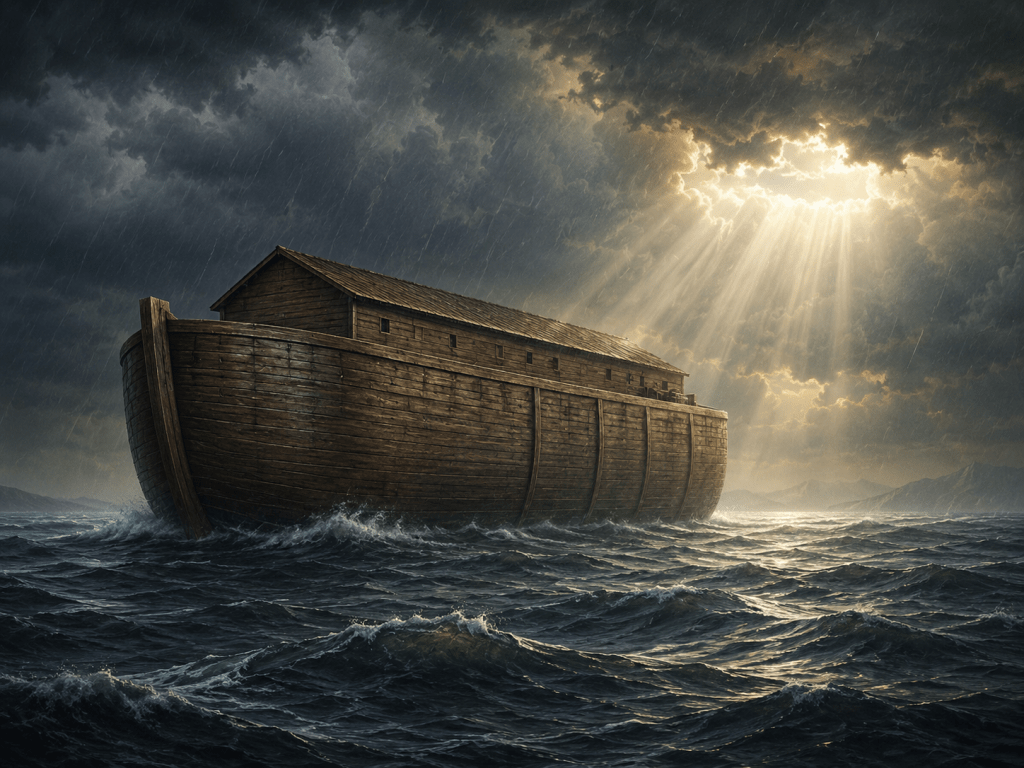
By the days of Noah, the earth was filled with corruption and violence. “Every intention of the thoughts of his heart was only evil continually” (Genesis 6:5). If we had been living then, we might have wondered whether God’s purpose for humanity had completely failed. Yet God preserved Noah and his family through the flood. Judgment came, but so did mercy. The waters that destroyed the wicked also carried the ark. God preserved the seed, renewed the world, and continued His covenant purpose.
At Babel, mankind gathered in pride to make a name for themselves. They resisted God’s command to fill the earth and instead tried to build their own centralized kingdom of human glory. But the Lord came down, confused their language, and scattered them. Babel seemed like another picture of human rebellion ruining God’s design. Yet God’s scattering of the nations prepared the way for His promise to Abraham: “In you all the families of the earth shall be blessed” (Genesis 12:3). Human pride could not stop God’s plan to bless the nations. In fact, Pentecost would one day answer Babel, as men from many languages heard the mighty works of God proclaimed in Christ.
Think also of Joseph. He was the beloved son of Jacob, favored and clothed with promise. But his brothers hated him, sold him into slavery, and left his father to believe he was dead. Joseph was carried down into Egypt, falsely accused, imprisoned, and forgotten. Surely this looked like a tragic detour, if not a complete disaster. Yet God was working through every betrayal and every prison wall. Joseph later told his brothers, “You meant evil against me, but God meant it for good” (Genesis 50:20). Through Joseph’s suffering, God preserved the family of Israel and kept alive the line through which Christ would come.
The Exodus story gives us another glimpse. Pharaoh enslaved Israel and ordered the death of Hebrew baby boys. The covenant people seemed crushed beneath Egypt’s power. But God raised up Moses from the very waters where Pharaoh meant to drown Israel’s sons. The tyrant’s own household became the place where Israel’s deliverer was preserved. God turned Pharaoh’s cruelty into the pathway of redemption.
Later, when Israel stood at the Red Sea, trapped between Pharaoh’s army and the waters, everything appeared hopeless. But the sea was not a barrier to God. It was the road He had appointed. The Lord parted the waters, saved His people, and overthrew their enemies. The moment of greatest danger became the moment of greatest deliverance.
We see the same pattern in the history of David. God promised that David’s throne would be established, but Saul hunted him like a criminal. Later, David’s own sin brought terrible consequences upon his house. The kingdom divided. The line of kings became corrupt. Eventually Jerusalem fell, the temple was destroyed, and the people were carried into exile. To many, it must have seemed as though God’s promises to David had failed.
But God had not forgotten. Through exile, judgment, and centuries of waiting, the Lord preserved the royal line. From David’s house came Jesus Christ, the Son of David and Son of God. The throne was not abandoned. It was waiting for the true King.
Then we come to the greatest apparent defeat in all history: the cross of Christ. The promised Messiah came preaching the kingdom, healing the sick, forgiving sinners, and revealing the Father. Yet He was betrayed by a friend, condemned by religious leaders, handed over to Gentiles, mocked, scourged, and crucified. His disciples scattered. His enemies rejoiced. Hope seemed buried in a tomb.
But the cross was not the failure of God’s saving purpose. It was the very center of it.
At Calvary, men meant evil. Satan meant destruction. But God meant salvation. Christ’s bruised heel crushed the serpent’s head. His death atoned for sin. His blood purchased His people. His resurrection broke the power of death. What looked like the darkest setback became the brightest revelation of God’s wisdom, justice, mercy, and love.
This is the Christian view of history. God is not losing. His kingdom is not fragile. His purposes do not depend upon human strength, political stability, cultural approval, or favorable circumstances. He works through barrenness, exile, slavery, betrayal, judgment, weakness, suffering, and even death.
This does not mean we pretend evil is good. Scripture never does that. Sin is sin. Betrayal wounds. Death is an enemy. Persecution is painful. The fall was tragic. The cross was bloody. But God is so sovereign, wise, and good that He can take what is truly evil and bend it to His holy purpose without Himself becoming the author of evil.
So when history seems dark, when the church seems weak, when your own life appears full of setbacks, remember the pattern of Scripture. Eden was lost, but Christ came as the last Adam. Abel was murdered, but the righteous line continued. Joseph was sold, but Israel was preserved. Israel was enslaved, but God redeemed them. David’s house fell into ruin, but the Son of David reigns forever. Christ was crucified, but He rose again.
God’s purpose has never been foiled. Not once. Not in Eden. Not in Egypt. Not in exile. Not at the cross. And not now.
The Lord who began His work in creation will complete His work in new creation. History is not drifting toward nothingness. It is moving toward the day when the kingdoms of this world become the kingdom of our Lord and of His Christ. Until then, we walk by faith, trusting that even in the setbacks, God is working all things according to the counsel of His will.

