
Suffering Is The Soil Of Growth


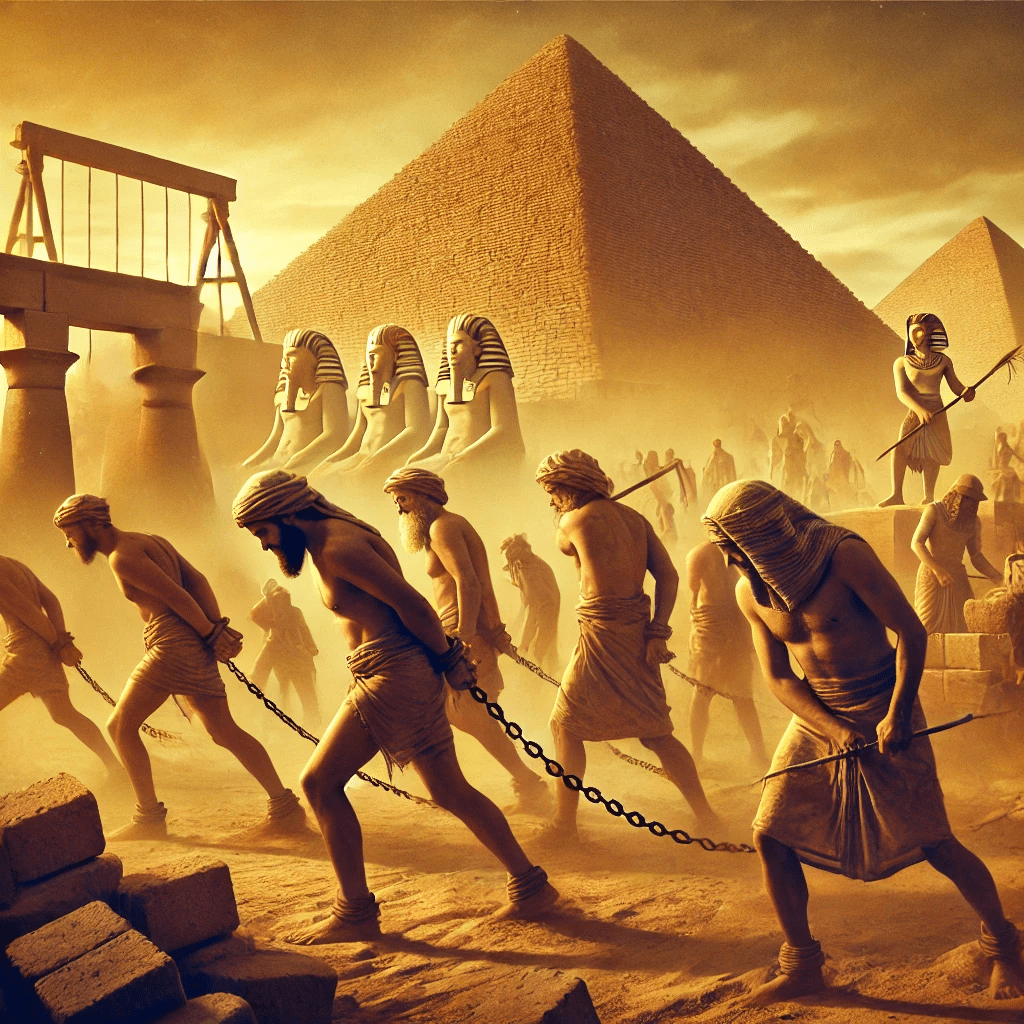
Whenever I feel the weight of deep suffering in my life—when the questions are louder than the answers and hope seems far—I try to imagine what it would have been like to live during the 400 years of Israelite bondage in Egypt. I picture the burning sun overhead, the endless days of grueling slave labor, and the absence of rest. There was no Sabbath yet—Moses hadn’t arrived. The law wasn’t given. The only thing I would have to cling to was a faint promise passed down from generations: that God would send a Deliverer. That one day, the land promised to our forefather Abraham would be ours. But until then, it was just the desert heat and the weight of chains. And yet, somehow, that promise sustained them—and it sustains me, too.

The Reality of Bondage

The Israelites lived under the heavy burden of Egyptian oppression for centuries. Generation after generation knew nothing but slavery. They woke up to the crack of whips, worked under the unforgiving sun, and fell asleep with calloused hands and aching bodies. There was no respite, no break, no weekend. The idea of a “Sabbath” didn’t exist yet. Their suffering was not brief or occasional; it was systemic and generational.

For many of us, suffering may not look like physical slavery, but it often feels like we are shackled. We live through seasons where it seems like God is silent, and hope is distant. Emotional pain, financial struggles, relational breakdowns, chronic illness—these burdens press down on us. We begin to wonder if God sees, if He hears, or if He remembers.

The Long Wait for a Promise

God had made a covenant with Abraham long before the Israelites ever entered Egypt. He promised Abraham a land, a nation, and a blessing that would reach the entire world (Genesis 12:1-3). But in Genesis 15:13-16, God also made it clear that the fulfillment of that promise would not come quickly:

“Know for certain that your offspring will be sojourners in a land that is not theirs and will be servants there, and they will be afflicted for four hundred years. But I will bring judgment on the nation that they serve, and afterward they shall come out with great possessions… for the iniquity of the Amorites is not yet complete.”

There is a staggering weight to those words: “not yet complete.” God was not only working on behalf of His people, but also weaving together justice for the land they would one day inhabit. The Israelites suffered while the sin of another people group reached its fullness. This is not a comfortable truth, but it is a divine one: sometimes our suffering is interwoven with a plan we cannot see, bound up in justice and mercy that are being timed with divine precision.

God Does Not Forget

Exodus 2:23-25 gives us a glimpse into God’s heart in the midst of long suffering:

“The people of Israel groaned because of their slavery and cried out for help. Their cry for rescue from slavery came up to God. And God heard their groaning, and God remembered his covenant with Abraham, with Isaac, and with Jacob. God saw the people of Israel—and God knew.”

That final phrase, “and God knew,” is one of the most comforting in all of Scripture. God’s knowledge is not detached. He doesn’t just observe—He enters in, He acts, and He delivers. And in His perfect timing, He raised up Moses to lead His people out of bondage. The deliverer came, just as He promised.

And centuries later, another Deliverer would come—the greater Moses, Jesus Christ. He didn’t just lead us out of physical slavery, but out of bondage to sin and death. His kingdom has been established, and though we wait for its fullness, the promise has already begun to unfold.

Christian Suffering Today

We still walk through wilderness seasons. We still feel the sting of unanswered prayers, the fatigue of carrying burdens that seem to have no end. But Christian suffering is never purposeless. It is shaped by a narrative of redemption. We don’t just suffer in silence; we suffer in hope.

When I feel stuck in the middle of a season that makes no sense, I try to remind myself: Abraham didn’t see the promised land fulfilled in his lifetime. The Israelites waited generations. Yet God was faithful. Always faithful. The same God who heard their groaning hears ours.

In our trials, we have the benefit of looking back on the full arc of God’s redemptive plan. We know how the story plays out. Jesus came. The Spirit dwells in us. The kingdom is here and still coming. That doesn’t take away the pain, but it infuses it with meaning and hope.

Encouragement for the Journey

If you’re walking through a season of suffering right now, I want to encourage you with this: God is not blind to your pain. He sees. He hears. He knows. Just as He remembered His covenant with Abraham, He remembers the promises He’s made to you in Christ.

The path may not be clear. The future might look uncertain. But we serve a God who fulfills every word He has spoken. Moses came. Jesus came. The promises have not failed, and they never will.

So hold on. Keep trusting. Your suffering is not the end of the story—it may very well be the soil in which God’s deepest work is being done. Trust in His providence, even when you can’t yet see the deliverance. Because it’s coming. It always does.


Facebook: https://www.facebook.com/share/15sc3nVy4A/

The Strength in Vulnerability: Trusting God and Others in Our Christian Walk

Vulnerability is one of the hardest things to embrace in life. The world often tells us that strength means independence, self-sufficiency, and never letting people see our weaknesses. But as followers of Christ, we are called to something greater—a life of honesty, humility, and deep connection with God and others.

For many of us, opening up about our struggles, failures, or doubts can feel risky. What if someone judges us? What if they compare their struggles to ours, making us feel insignificant? What if they use our openness against us? These are real concerns, and yet, vulnerability is a crucial part of our spiritual growth and relationships within the church.

Let’s explore why vulnerability is essential, how to cultivate it wisely, and how to handle it when someone responds poorly to our openness.

The Biblical Call to Vulnerability

The Bible is filled with examples of people who were open about their struggles, pain, and weaknesses before God and others. Jesus Himself modeled vulnerability—He wept (John 11:35), expressed deep distress in the Garden of Gethsemane (Matthew 26:38), and even cried out in anguish on the cross (Matthew 27:46). If Jesus, the Son of God, did not hide His emotions or burdens, why should we?

Paul also embraced his weaknesses, writing in 2 Corinthians 12:9-10:

“But he said to me, ‘My grace is sufficient for you, for my power is made perfect in weakness.’ Therefore I will boast all the more gladly about my weaknesses, so that Christ’s power may rest on me. That is why, for Christ’s sake, I delight in weaknesses, in insults, in hardships, in persecutions, in difficulties. For when I am weak, then I am strong.”

Vulnerability is not a sign of failure—it is a demonstration of trust in God. It allows us to rely on His strength rather than our own and to build relationships based on honesty and grace.

Why Vulnerability Matters in Christian Community

1. It Fosters Genuine Connection

Surface-level relationships may be comfortable, but they don’t bring true healing or spiritual growth. When we open up to others, we create space for authentic connection. James 5:16 tells us:

“Therefore confess your sins to each other and pray for each other so that you may be healed. The prayer of a righteous person is powerful and effective.”

Healing and encouragement happen when we are honest about our struggles and allow others to come alongside us.

2. It Allows Others to Support Us in Prayer

When we keep our burdens hidden, we deny others the opportunity to intercede for us. Galatians 6:2 urges us:

“Carry each other’s burdens, and in this way you will fulfill the law of Christ.”

Sharing our struggles allows our brothers and sisters in Christ to lift us up in prayer, offering the strength we need to endure trials.

3. It Reflects Christ’s Love and Grace

When we are vulnerable, we create a culture of openness and grace. If we pretend to be perfect, we unintentionally tell others that they need to do the same. But when we admit our shortcomings, we remind people of God’s grace. As Psalm 34:18 reassures us:

“The Lord is close to the brokenhearted and saves those who are crushed in spirit.”

God draws near to those who are hurting, and as His people, we should do the same for one another.

How to Be Vulnerable with Wisdom

Being vulnerable does not mean sharing everything with everyone. It requires discernment. Here are some practical ways to cultivate healthy vulnerability in your faith and relationships:

1. Start Small

You don’t have to share your deepest struggles with everyone at once. Begin by opening up to a trusted friend, mentor, or small group. Allow yourself to experience the freedom of being honest without fear.

2. Seek Out Godly Counsel

The elders of the church are there for a reason. We elect them for their wisdom, spiritual maturity, and ability to shepherd the congregation. If you are struggling, don’t hesitate to reach out to them. Titus 1:7-9 describes elders as:

“…hospitable, one who loves what is good, who is self-controlled, upright, holy and disciplined. He must hold firmly to the trustworthy message as it has been taught, so that he can encourage others by sound doctrine and refute those who oppose it.”

Elders and church leaders are equipped to guide you through spiritual battles, offer biblical wisdom, and help you grow in faith.

3. Set Boundaries with Unsafe People

Unfortunately, not everyone will respond well to your vulnerability. Some people may judge, compare, or dismiss your struggles. If you encounter someone who:

  • Guilt-trips you by making you feel like your struggles aren’t valid
  • Constantly gives unsolicited advice instead of listening
  • Uses your openness against you

…then it’s okay to set boundaries. Protect your heart, but don’t let one bad experience stop you from seeking authentic relationships.

A simple response to an unhelpful person could be:

  • “I appreciate your perspective, but I was really hoping for someone to listen.”
  • “I know you’ve had struggles too, but right now, I just need to share what I’m going through.”
  • “I don’t think this conversation is helping me in the way I need right now.”

If a person continues to disregard your boundaries, it’s okay to limit how much you share with them in the future.

4. Trust God More Than Your Fear of Rejection

At the end of the day, vulnerability is an act of trust—not just in people, but in God. Even if someone misuses your openness, God sees your heart and will not let your pain go to waste. Psalm 56:8 reminds us:

“You have kept count of my tossings; put my tears in your bottle. Are they not in your book?”

God cares deeply about your struggles, and He honors the trust you place in Him and His people.

Final Encouragement

I want to leave you with this: You are not alone in your struggles. Whatever you are facing, no matter how small or overwhelming it seems, you are deeply valued by God. The church is meant to be a place of healing, grace, and support. While not every person will respond perfectly, there are godly men and women—elders, pastors, mentors—who are here to walk with you in your faith.

Vulnerability is not weakness. It is strength in Christ. It allows us to experience His love more fully and to build relationships that reflect His grace. Keep seeking, keep trusting, and keep leaning on the body of Christ. You are not meant to walk this journey alone.

If you’ve been hurt by someone misusing your openness, don’t let it close your heart. Instead, bring it to God, seek wisdom in who to trust, and continue pressing into His love. For when we are weak, He is strong (2 Corinthians 12:10).

Enosh: They Began To Call Upon The Name Of The LORD

Introduction

Genesis 4:25-26 marks a critical turning point in biblical history. Following the tragic events of Cain’s murder of Abel, we see a glimmer of hope in the birth of Seth and, subsequently, his son Enosh. The passage states:

“Adam knew his wife again, and she bore a son and called his name Seth, for she said, ‘God has appointed for me another offspring instead of Abel, for Cain killed him.’ To Seth also a son was born, and he called his name Enosh. At that time people began to call upon the name of the LORD.” (Genesis 4:25-26, ESV)

This passage is significant for several reasons. First, it establishes the continuation of the godly lineage through Seth. Second, it introduces Enosh, whose name carries deep theological implications. Lastly, it marks the first recorded instance of collective worship and invocation of Yahweh’s name.

The Consequences of Sin: From Expulsion to Murder

Before examining the significance of Enosh and the subsequent calling upon the name of the Lord, it is necessary to understand the broader context. Adam and Eve had been expelled from the Garden of Eden due to their disobedience (Genesis 3). God had warned that eating from the tree of the knowledge of good and evil would bring death (Genesis 2:17). While physical death did not occur immediately, spiritual death—separation from God—became a reality. Sin had entered the world, corrupting all of human existence.

The first clear manifestation of this corruption was the murder of Abel by his brother Cain (Genesis 4:8). Cain, driven by jealousy and rage, took the life of his righteous brother, an act that demonstrated the quick and devastating effects of sin. As the firstborn of Adam and Eve, Cain was expected to carry forward the human race, but instead, he brought forth bloodshed. This heinous act showed that sin was not merely an isolated incident but a growing malignancy that threatened humanity’s future.

The Birth of Seth: God’s Provision

Following Abel’s death and Cain’s exile, Eve bore another son, Seth. His name means “appointed” or “granted,” reflecting Eve’s recognition that God had graciously provided another offspring. The significance of Seth’s birth is monumental, as he becomes the father of a line through which faithfulness to God is preserved. Unlike Cain’s descendants, who became known for their rebellion, Seth’s descendants would be those who “call upon the name of the Lord.”

Enosh: The Fragility of Man

Seth’s son, Enosh, is a figure of great theological importance. His name, as noted by biblical scholar Kenneth A. Mathews, connotes the “fragility of man.” The Hebrew word Enosh is often used in Scripture to emphasize human weakness and mortality (cf. Psalm 103:15-16; Job 7:17). The naming of Enosh signals an awareness that human life is fleeting and ultimately dependent on God.

At this point in history, humanity had not yet acquired great wealth, power, or fame. There were no kingdoms, no vast empires, no accumulated fortunes—only the stark reality of life’s brevity. Unlike later generations who sought to make a name for themselves (Genesis 11:4), the early descendants of Adam were deeply aware of their mortality.

The Universal Problem: Death

The greatest existential crisis for humanity has always been the certainty of death. As Solomon later writes, “For the living know that they will die” (Ecclesiastes 9:5). This awareness of death, apart from God, leads to either despair or defiance. Some, like Cain and his descendants, sought to establish earthly legacies, attempting to defy their own mortality through human achievement. Others, like those in Seth’s line, turned toward God in recognition of their dependence on Him.

The ultimate distinction between the righteous and the wicked is how they respond to this reality. For the righteous, death is not the end; it is the beginning of eternal life in God’s presence. For the wicked, death is the terrifying reality of eternal separation from God’s holiness, goodness, and mercy. Jesus Himself warned of this reality:

“Then he will say to those on his left, ‘Depart from me, you cursed, into the eternal fire prepared for the devil and his angels.’” (Matthew 25:41, ESV)

This truth ought to shake every person to the core. If sin leads to death, and if death apart from God results in eternal judgment, what hope is there?

The First Revival: Calling Upon the Name of the Lord

Genesis 4:26 declares that “at that time people began to call upon the name of the LORD.” This phrase marks the first recorded act of public worship and corporate prayer. The Hebrew verb qara’ (“to call”) is used elsewhere in Scripture to indicate an earnest plea for divine help (cf. Joel 2:32; Psalm 116:4).

This act of calling upon the Lord was not merely a religious ritual; it was a declaration of dependence on God in the face of human mortality. The contrast between the lines of Cain and Seth becomes clear—while Cain’s descendants pursued cultural achievements apart from God (Genesis 4:17-22), Seth’s descendants turned to God in faith.

The Gospel in Genesis 4:25-26

The pattern set in Genesis 4:25-26 foreshadows the gospel message. Just as humanity’s only hope after the fall was to call upon God’s name, so too is salvation available today only by calling upon the name of Jesus Christ:

“For ‘everyone who calls on the name of the Lord will be saved.’” (Romans 10:13, ESV)

This call is not merely verbal but a heart-cry of repentance and faith. Seth’s descendants recognized their mortality and sought God, just as every person today must recognize their sinfulness and turn to Christ. Jesus, the greater Seth, came to undo the curse of death by offering eternal life to those who trust in Him.

Call Upon the Name of the Lord – NOW

The urgency of the gospel cannot be overstated. Death is certain, and eternity is at stake. The Bible warns, “it is appointed for man to die once, and after that comes judgment” (Hebrews 9:27). There is no second chance beyond the grave. Today is the day of salvation (2 Corinthians 6:2).

Do not wait. Do not harden your heart.

Just as Seth’s line turned to God in their frailty, so too must we turn to Christ, who alone offers the hope of eternal life. Call upon the name of the Lord—now.

Conclusion

Genesis 4:25-26 reveals a fundamental truth about human existence: we are mortal, fragile, and utterly dependent on God. The birth of Enosh and the subsequent call upon the name of the Lord mark a turning point in human history, setting the stage for a people who seek God in the midst of a fallen world. This passage ultimately points forward to Jesus Christ, the only One who can save us from death and grant us eternal life.

The question remains: will you call upon the name of the Lord? Eternity hangs in the balance. Turn to Christ today.

Stay Connected!

If you found this article insightful, I invite you to like and follow ReformedFaithInsights on Facebook! Join our growing community as we explore biblical truths, deepen our faith, and find assurance in Christ.

🔹 Engage with thought-provoking content
🔹 Discover biblical insights for everyday life
🔹 Be encouraged in your walk with God

Click link here: https://www.facebook.com/profile.php?id=61573691531360

The Law and the Gospel: The Fulfillment of Justice and Love in Christ

Humanity stands before a holy God with a deep and undeniable need—a need that can only be fulfilled in Christ. The law of God, given as a revelation of His perfect righteousness, serves as both a mirror and a tutor. It reveals the standard of divine perfection and, at the same time, exposes the depths of our sin and inability to meet it. The law is not merely a set of external rules, but a revelation of God’s holy character, which convicts our hearts, minds, and souls.

The Law: A Mirror to the Soul

When God gave the Ten Commandments (Exodus 20:1-17), He was not just giving behavioral guidelines, but revealing the perfect moral standard by which all humanity would be judged. The law goes beyond external actions and reaches into the very thoughts and intentions of the heart. Jesus affirmed this when He said:

“You have heard that it was said to those of old, ‘You shall not murder; and whoever murders will be liable to judgment.’ But I say to you that everyone who is angry with his brother will be liable to judgment…” (Matthew 5:21-22)

“You have heard that it was said, ‘You shall not commit adultery.’ But I say to you that everyone who looks at a woman with lustful intent has already committed adultery with her in his heart.” (Matthew 5:27-28)

The law is spiritual. It does not merely prohibit outward sins but judges the very thoughts and inclinations of the heart. The Apostle Paul himself, once a proud Pharisee, came to understand the crushing weight of the law when he wrote:

“Yet if it had not been for the law, I would not have known sin. For I would not have known what it is to covet if the law had not said, ‘You shall not covet.’” (Romans 7:7)

God’s law is relentless. It does not allow us to justify ourselves by comparing ourselves to others or by pointing to our good deeds. It condemns everyone under sin:

“For all have sinned and fall short of the glory of God.” (Romans 3:23)

The Gospel: Love and Justice Fulfilled in Christ

If the law shows us our guilt, then the Gospel shows us our hope. The law demands righteousness, and where we fail, it demands justice. Yet God, in His infinite mercy, did not leave us to perish under the weight of our guilt. Instead, He provided a way—a way that both satisfies justice and demonstrates the greatest love imaginable.

At the heart of the Gospel is the person and work of Jesus Christ. He did what no one else could do: He lived a perfect, sinless life, completely fulfilling the demands of the law (Matthew 5:17). And yet, in love, He willingly took upon Himself the punishment that we deserved.

“But God shows his love for us in that while we were still sinners, Christ died for us.” (Romans 5:8)

At the cross, divine justice and divine love met. The justice of God demanded that sin be punished, but the love of God provided a substitute—Jesus Christ, the righteous one.

“For our sake he made him to be sin who knew no sin, so that in him we might become the righteousness of God.” (2 Corinthians 5:21)

Christ bore the wrath of God, satisfying the demands of divine justice so that we, guilty sinners, might be reconciled to the Father. The full penalty of sin was paid:

“Christ redeemed us from the curse of the law by becoming a curse for us—for it is written, ‘Cursed is everyone who is hanged on a tree.'” (Galatians 3:13)

Yet the story does not end with the cross. Jesus – bodily – rose from the grave, demonstrating that His sacrifice was accepted and that death had been defeated (1 Corinthians 15:3-4). Now, through Him, we are invited to come home to the Father, not as condemned sinners, but as beloved children.

The Call: Come to Christ

The Gospel is not merely an abstract truth—it is an invitation. It calls for a response. Jesus’ arms are open to all who will come:

“Come to me, all who labor and are heavy laden, and I will give you rest.” (Matthew 11:28)

There is no sin too great, no heart too hardened, that He cannot redeem. The blood of Christ cleanses all who repent and believe in Him:

“If we confess our sins, he is faithful and just to forgive us our sins and to cleanse us from all unrighteousness.” (1 John 1:9)

How, then, shall we respond? The Bible is clear:

“If you confess with your mouth that Jesus is Lord and believe in your heart that God raised him from the dead, you will be saved.” (Romans 10:9)

There is no work you must perform, no penance you must endure. Salvation is a free gift:

“For by grace you have been saved through faith, and this is not your own doing; it is the gift of God, not a result of works, so that no one may boast.” (Ephesians 2:8-9)

Today, the invitation stands. The Father calls you home. Christ has paid the price. Justice has been satisfied. Love has been displayed.

Will you turn from your sin and trust in Christ? Will you surrender your life to Him as Lord and Savior? There is no greater decision, no greater joy, and no greater assurance than to be reconciled to God through Jesus Christ. Come to Him today.

Venmo: @reformedfaithinsights

Breaking Free from Co-Dependency: A Christian Perspective on Healthy Boundaries

Co-dependency and people-pleasing are struggles many Christians face, often disguised as virtues like selflessness and kindness. While Jesus calls us to love and serve others, He does not command us to be enslaved to their expectations. Many believers wrestle with guilt over setting boundaries, fearing they are failing to “be like Christ.” However, as Dr. Henry Cloud writes in Boundaries, “We are responsible to others and for ourselves” (Cloud & Townsend). True Christian love includes wisdom, discernment, and personal responsibility—not sacrificing our emotional and spiritual well-being to appease others.

The Trap of People-Pleasing

People-pleasers often seek approval, fearing rejection or conflict. They may struggle with saying no, feeling they must always accommodate others. This mindset, while seeming loving, can lead to resentment, burnout, and even enable unhealthy behaviors in relationships. The Bible warns against this misplaced fear:

“The fear of man lays a snare, but whoever trusts in the Lord is safe.” (Proverbs 29:25)

Jesus Himself never lived in fear of human approval. He healed on the Sabbath despite religious leaders’ disapproval (Mark 3:1-6), spoke hard truths that offended many (John 6:60-66), and ultimately chose the Father’s will over pleasing the crowds. If Christ, our perfect example, refused to be controlled by others’ expectations, we too must learn to live for God’s approval, not man’s.

Jesus’ Compassion Without Co-Dependency

A key reason Christians struggle with boundaries is a misunderstanding of Jesus’ compassion. He was deeply moved by people’s suffering, yet He did not allow their demands to dictate His actions. Consider His interaction with the rich young ruler in Mark 10:17-22. Jesus loved the man but did not chase after him when he walked away unwilling to surrender his wealth. Love does not mean meeting every demand; sometimes, love means letting go.

Jesus also withdrew to pray alone, despite the needs of the crowds (Luke 5:16). He knew that His time with the Father was crucial, teaching us that self-care and spiritual renewal are not selfish but necessary. If Jesus prioritized time away from people to seek God’s presence, how much more should we?

Biblical Boundaries: A Model for Healthy Relationships

Dr. Henry Cloud explains that boundaries define what is ours to control and what is not. We are called to love others, but we cannot take responsibility for their emotions, decisions, or actions. Galatians 6:2 tells us to “bear one another’s burdens,” but just a few verses later, Galatians 6:5 clarifies that “each will have to bear his own load.” Healthy relationships balance support with personal responsibility.

Establishing boundaries means learning to say no when needed, as Jesus did (Luke 12:13-14). It means loving people without enabling destructive behaviors. It means recognizing that our worth comes from God, not from human approval.

Walking in Freedom

Breaking free from co-dependency requires a shift in focus. Instead of seeking approval from people, we fix our eyes on Christ, trusting His love is enough. As we walk in obedience, we learn that true peace comes not from pleasing others but from resting in the security of God’s grace.

“Come to me, all who labor and are heavy laden, and I will give you rest.” (Matthew 11:28)

Healthy boundaries, rooted in biblical wisdom, free us to love others as Christ did—compassionately, but with clarity and conviction.

Jesus, the Defender and Shepherd of His Bride, A Meditation

Jesus Christ, the Bridegroom, loves His Bride, the Church, with a fierce and holy passion. His defense of her is not passive but active and intentional, rooted in His perfect love and unyielding commitment to truth and righteousness. In His earthly ministry, He boldly stood against the Scribes and Pharisees, who burdened God’s people with legalism and distorted the beauty of God’s commands. With words sharp as a sword and actions full of grace, Jesus confronted hypocrisy and protected His Bride from falsehood, ensuring she could thrive in truth.

Even now, as the risen and exalted Lord, Jesus remains steadfast in His defense of His Bride. When the Church drifts into waywardness—whether through complacency, compromise, or corruption—He does not abandon her. Instead, He lovingly calls her back, speaking truth that convicts and restores. He disciplines her not out of wrath, but out of a desire to purify her, to make her holy, without spot or blemish (Ephesians 5:27).

Consider the imagery:

  • As the Good Shepherd, Jesus seeks the lost sheep, bringing them back to the fold.
  • As the Bridegroom, He gently but firmly corrects His Bride when she strays, never forsaking her but always drawing her closer.
  • As the Righteous King, He defends her against her enemies—both external and internal—standing as her shield and advocate.

Reflect on these truths:

  • Jesus defends against falsehood: When the Church faces attacks from worldly philosophies or religious legalism, Jesus reminds her of the Word, guiding her into all truth through the Holy Spirit.
  • Jesus confronts sin within the Church: He calls His Bride to repentance when she forgets her first love, ensuring she remains faithful and radiant in her witness.
  • Jesus sustains His Bride: Even when the Church feels weak or fractured, He upholds her by His grace, promising that the gates of hell will not prevail against her (Matthew 16:18).

Ask yourself:

  • Do I trust in Jesus to defend His Church, even when she faces trials and persecution?
  • How do I respond when Christ lovingly corrects me, as part of His Bride?
  • Am I committed to living as a faithful member of His Church, standing for truth and pursuing holiness?

Pray:
“Lord Jesus, thank You for loving Your Bride with an everlasting love. Thank You for defending us from falsehood, confronting us when we stray, and calling us back to the truth. Help me to trust in Your perfect leadership of the Church and to walk in faithfulness, as part of Your holy people. Make us a radiant Bride, prepared for Your return. Amen.”

May this meditation remind you of the steadfast love and guardianship of Christ, who always defends, purifies, and leads His Bride for the glory of God.

Jesus, the Light of the World: A Journey from Shadows to Salvation


Introduction: Light and Darkness in Scripture

Throughout Scripture, the themes of light and darkness are woven into the story of humanity’s relationship with God. From the opening verses of Genesis, where God commands light to shine into the void, to the final chapters of Revelation, where the Lamb is the eternal light, these symbols carry profound spiritual significance. Light often represents God’s presence, truth, and holiness, while darkness symbolizes sin, separation, and spiritual blindness.

Understanding this contrast isn’t just theological—it’s deeply personal. Every day, we’re faced with choices that align us with either light or darkness. As Christians, recognizing the spiritual implications of these symbols can help us navigate life with clarity, purpose, and hope.

At the heart of this theme is Jesus Christ, who declared, “I am the light of the world. Whoever follows me will not walk in darkness, but will have the light of life” (John 8:12). His life, death, and resurrection illuminate the path for all who seek truth and redemption.

In this blog, we’ll explore the spiritual meaning of light and darkness through key Scriptures, consider how Jesus fulfills the role of the ultimate Light, and reflect on how we, as His followers, are called to walk in the light. Let’s uncover how this divine truth can transform our lives and inspire us to shine brightly in a darkened world.


I. The Spiritual Symbolism of Light and Darkness in Scripture

The Bible opens with a dramatic contrast: “The earth was without form and void, and darkness was over the face of the deep” (Genesis 1:2). Into this formless void, God speaks His first recorded words: “Let there be light” (Genesis 1:3). In this simple but profound act, God establishes light as the foundation of creation—a symbol of His presence, power, and life-giving truth. From the very beginning, light represents the order, clarity, and goodness that come from God, standing in stark opposition to the chaos and emptiness of darkness.

Throughout Scripture, light continues to symbolize God’s truth and guidance. The psalmist declares, “Your word is a lamp to my feet and a light to my path” (Psalm 119:105), reminding us that God’s Word illuminates the way forward, even in life’s darkest moments. Similarly, the apostle John writes, “God is light, and in Him is no darkness at all” (1 John 1:5), emphasizing God’s perfect purity and holiness.

In contrast, darkness in Scripture is often linked to sin, ignorance, and separation from God. John 3:19–20 reveals the human tendency to “love darkness rather than light because their works were evil.” Darkness blinds and deceives, pulling people away from the truth and into spiritual confusion.

This ongoing tension between light and darkness underscores the human struggle to choose between God’s truth and the world’s lies. Yet, God’s light shines into the darkness, offering redemption and hope to all who seek Him. This foundational understanding sets the stage for the ultimate revelation of light in Jesus Christ, the Savior who overcomes darkness once and for all.


II. Light and Darkness in Jesus’ Ministry

The themes of light and darkness find their ultimate fulfillment in the life and ministry of Jesus Christ. From the beginning of His earthly mission, Jesus is introduced as the light that pierces the spiritual darkness of the world. The Gospel of Matthew quotes Isaiah’s prophecy, proclaiming, “The people dwelling in darkness have seen a great light” (Matthew 4:16). This statement underscores the transformative power of Jesus, who brings hope and clarity to those lost in sin and despair.

Jesus Himself makes this bold declaration: “I am the light of the world. Whoever follows me will not walk in darkness, but will have the light of life” (John 8:12). This statement encapsulates His role as the ultimate source of spiritual illumination. His teachings, miracles, and example expose the works of darkness and guide humanity toward truth and righteousness. Through Him, the blind see, both physically and spiritually, as He offers clarity and redemption to those willing to follow Him.

Yet, the reality of darkness is starkly evident in the events leading to His crucifixion. As Jesus hangs on the cross, “darkness came over the whole land” (Luke 23:44). This physical darkness mirrors the weight of sin and judgment borne by Christ in that moment. However, the story doesn’t end there. Through His resurrection, Jesus conquers the darkness of sin and death, affirming His role as the eternal light.

In Jesus’ ministry, we see light and darkness collide, but the light ultimately prevails. His victory offers believers not only salvation but also the power to walk confidently in His light, no longer bound by the shadows of sin.


III. The Christian Call to Walk in the Light

As followers of Christ, we are called to live as “children of the light” (Ephesians 5:8). This calling is not a passive identity but an active responsibility. Just as light reveals, purifies, and guides, Christians are meant to reflect Christ’s light in a world often shrouded in darkness. Through our actions, words, and choices, we demonstrate the transformative power of God’s light.

Walking in the light begins with aligning our lives with the truth of God’s Word. Psalm 119:105 describes Scripture as “a lamp to my feet and a light to my path,” underscoring the importance of daily immersion in God’s teachings. His Word exposes areas of sin and provides clarity for decisions, enabling us to navigate life with purpose and integrity.

Living in the light also means rejecting the deeds of darkness. Ephesians 5:11 warns us, “Take no part in the unfruitful works of darkness, but instead expose them.” This requires courage and discernment as we resist temptations and confront injustices. It’s a daily commitment to leave behind old patterns of sin and instead pursue righteousness, compassion, and humility.

Moreover, Jesus calls us to shine His light for others. “You are the light of the world,” He tells His followers in Matthew 5:14–16. Our lives should be a reflection of His love and grace, drawing others out of darkness and toward the hope found in Him.

Walking in the light is both a privilege and a responsibility. It transforms our hearts and radiates outward, offering hope to a world desperately in need of God’s presence. Through Christ, we illuminate the path to life and invite others to join us in His marvelous light.


IV. Jesus Christ: The Eternal Light of the World

At the center of the Bible’s message of light and darkness stands Jesus Christ, the eternal and unchanging Light of the World. His proclamation in John 8:12—“I am the light of the world. Whoever follows me will not walk in darkness, but will have the light of life”—captures the essence of His mission. Jesus didn’t come merely to reveal the light; He is the light. In Him, we find the full expression of God’s truth, love, and power to overcome darkness.

The significance of Jesus as the Light of the World is not limited to His earthly ministry. In Revelation 21:23, we glimpse the eternal reality of His light: “The city has no need of sun or moon to shine on it, for the glory of God gives it light, and its lamp is the Lamb.” This promise reminds us that Jesus is not only the source of light for our lives today but also the eternal illumination of God’s kingdom. His light is both personal and cosmic, guiding individuals and renewing creation itself.

For those who follow Him, Jesus brings clarity to confusion, hope to despair, and redemption to sin. He shines into the darkest corners of our lives, offering forgiveness and a new way forward. His light is not a distant or fleeting glow—it is a constant, transformative presence that changes everything.

As we embrace the light of Christ, we are empowered to reflect it to others. His light shines through us, drawing people out of the shadows and into His truth. In Jesus, we find not only the light to guide our steps but the promise of an eternal radiance that will never fade.


Conclusion: Embracing the Light of Christ

The contrast between light and darkness runs through Scripture, reminding us of the spiritual battle at the heart of human existence. Light symbolizes the presence, truth, and holiness of God, while darkness represents sin, separation, and confusion. Throughout history, humanity has grappled with these opposing forces, but in Jesus Christ, the ultimate resolution is revealed.

Jesus, the Light of the World, overcame the darkness of sin and death, shining the brilliance of God’s love into the lives of all who believe in Him. His light is not just a metaphor; it is the very essence of His transformative power. Through His life, death, and resurrection, Jesus invites us to step out of the shadows and into the freedom of His light.

As Christians, we are called to walk in this light—not only for our own growth but as a testimony to others. When we align ourselves with God’s Word, resist the pull of sin, and live with integrity and love, we reflect Christ’s light in a world desperate for hope. “You are the light of the world,” Jesus says in Matthew 5:14–16, encouraging us to let our lives shine so others may glorify God.

Let this be an invitation to examine where light and darkness intersect in your life. Are there areas where you need the light of Christ to shine? Seek Him through prayer, Scripture, and fellowship. Embrace His guidance and live boldly as a child of the light. Through Jesus, we are not only transformed but empowered to bring His radiant hope to the world.


Incarnation Of The True Second Adam

The Bible unfolds a sweeping narrative of God’s redemptive plan to restore what was lost in Adam’s fall. Central to this story is the promise of a Second Adam—one who would succeed where the first failed, bringing blessing and restoration to humanity and creation. Noah, Abraham, and Israel each played vital roles in this unfolding drama, but none of them could ultimately fulfill this role. Noah was tasked with stewarding a renewed earth after the flood, yet his failure in judgment perpetuated the curse. Abraham was chosen to receive a great name and blessing, but his lack of faith before Pharaoh brought curses instead of blessings. Israel, as a corporate Adam, was called to be a nation of priests in the Promised Land, but their disobedience led to exile rather than restoration. Each of these figures—despite their significant roles—reveals humanity’s continued inability to fulfill Adam’s mandate of righteousness and dominion. Their stories point to the need for a greater fulfillment, one found in Jesus Christ, the true and perfect Second Adam. In Him, we see judgment exercised righteously, faith expressed perfectly, and obedience rendered fully, accomplishing what Noah, Abraham, and Israel could not.

I. Noah: Gaining the Ground but Failing in Kingly Judgment

After the floodwaters subsided, Noah emerged as a new beginning for humanity, a kind of Second Adam tasked with restarting the work of stewardship over creation. God reaffirmed this mandate in His covenant with Noah, instructing him to “be fruitful and multiply and fill the earth” (Genesis 9:1). Noah’s role was one of restoration—reclaiming the ground that had been cursed because of Adam’s sin. For a moment, hope glimmered as Noah planted a vineyard, signaling the possibility of creation’s flourishing under righteous stewardship. Yet, as with Adam, the narrative quickly turned tragic.

Noah’s vineyard bore fruit, but instead of leading to blessing, it became a source of his downfall. He drank from its wine, became drunk, and lay uncovered in his tent. In this vulnerable state, sin surfaced again. Ham, one of Noah’s sons, dishonored his father, and when Noah awoke, he pronounced a curse—not on Ham directly but on Ham’s son, Canaan. This moment echoes the original curse in Eden, showing that sin and judgment continued to ripple through humanity despite God’s act of renewal.

Noah’s failure reveals that even with a fresh start, humanity could not escape the grip of sin. His lack of judgment in becoming intoxicated, coupled with his impulsive cursing of Canaan, perpetuated a cycle of broken relationships and curses rather than ushering in the blessing and restoration anticipated in a Second Adam. Far from redeeming creation, Noah’s actions demonstrated humanity’s persistent inability to overcome the effects of the fall. His story points forward to the need for someone greater—one who could act in perfect righteousness, exercise true dominion, and bring blessing instead of curse.

II. Abraham: The Chosen One but Failing in Priestly Judgment

After the flood, humanity multiplied again, and the descendants of Noah’s son Shem settled in the land of Babylon. Instead of spreading across the earth as God commanded, they united to build a city with a tower that reached the heavens, seeking to “make a name for themselves” (Genesis 11:4). Their defiance of God’s purpose revealed a persistent human tendency to grasp for significance apart from God. Rather than submitting to His will, they sought autonomy and glory for themselves. In response, God judged their pride by confusing their language and scattering them over the earth.

Amid this fractured world, God chose Abram (later Abraham) from the line of Shem, promising to make his name great and to bless all nations through him (Genesis 12:2-3). This divine act stands in stark contrast to the self-exalting efforts at Babel. Abraham was to be a conduit of God’s blessing, a pivotal figure in redemptive history. Yet, like Noah, Abraham’s story reveals that he, too, was incapable of fulfilling the role of the Second Adam.

When Abraham and Sarah faced famine in Canaan, they fled to Egypt. Fearful for his life, Abraham presented Sarah as his sister, allowing Pharaoh to take her into his household (Genesis 12:10-20). Instead of confronting Pharaoh and denouncing evil as a Priestly figure, Abraham passively allowed the situation to unfold. God intervened by striking Pharaoh’s house with plagues, but the incident left a curse in its wake: the barrenness of Pharaoh’s household. Abraham’s failure to act righteously echoed Adam’s failure to protect and lead in Eden, resulting in harm rather than blessing.

This episode underscores Abraham’s inadequacy as a redemptive figure. While chosen by God and given extraordinary promises, he faltered in faith and failed to exercise priestly judgment. His story points forward to the need for a true Second Adam—one who would perfectly trust God, confront evil, and extend blessing without faltering.

III. Israel: The Corporate Adam but Failing in Covenant Faithfulness

When God delivered Israel from 400 years of slavery in Egypt, He established them as a nation set apart to be His representatives on earth—a corporate Adam. At Mount Sinai, He called them to be “a kingdom of priests and a holy nation” (Exodus 19:6), tasked with proclaiming His righteousness and mediating His presence to the world. Their possession of the Promised Land, the land of Canaan, was a tangible sign of God’s covenant faithfulness, a reversal of the curse on Adam. However, just as Adam failed in Eden, Israel failed to live up to their calling.

The conquest of Canaan began with great promise. God gave Israel victory over powerful nations and pledged to protect them as long as they obeyed His commands. Central to their mission was the responsibility to pronounce judgment on the evil practices of the nations occupying the land—practices such as idolatry and child sacrifice. By purging the land of wickedness, Israel was to restore it as a place where God’s presence could dwell. Yet, they failed to fulfill this role.

Instead of fully obeying God’s commands, Israel compromised with the Canaanites, allowing their idolatrous practices to persist. Judges 2:2-3 records God’s rebuke: “You have not obeyed my voice. What is this you have done? So now I say, I will not drive them out before you, but they shall become thorns in your sides.” Israel’s failure to exercise judgment and uphold God’s law led to cycles of rebellion, oppression, and sin. Their disobedience culminated in national exile, mirroring Adam’s expulsion from Eden. Rather than becoming a light to the nations, they succumbed to the darkness they were called to oppose.

Israel’s story highlights the persistent inability of humanity to overcome sin and fulfill God’s redemptive purposes. Their failure as a corporate Adam demonstrates the need for a perfect mediator and redeemer. Jesus Christ, as the true Second Adam, succeeded where Israel failed. He perfectly obeyed God’s law, confronted and judged sin, and established a new covenant, securing eternal redemption for His people and the restoration of creation.

Conclusion: Jesus Christ, the True Second Adam

The stories of Noah, Abraham, and Israel reveal a recurring pattern in the biblical narrative: God’s desire to redeem and restore humanity through covenantal relationships and righteous stewardship, and humanity’s persistent inability to fulfill that calling. Each of these figures or groups was given a role that echoed Adam’s original mandate to exercise dominion, bring blessing, and glorify God, yet all fell short in significant ways. These failures magnify the need for the promised Second Adam, who would accomplish what they could not.

Noah was entrusted with a renewed earth and began with hope by planting a vineyard, symbolizing the potential for creation’s flourishing. Yet, his drunkenness and curse on Canaan perpetuated the brokenness introduced by the First Adam. Abraham was called to be a blessing to all nations and to walk in faith, but his failure to confront Pharaoh’s sin demonstrated humanity’s continued struggle to trust and obey God fully. Israel, as a corporate Adam, was tasked with purging evil from the Promised Land and living as a kingdom of priests, but their compromise and idolatry led to curses and exile, rather than the restoration of creation.

In each case, God’s purposes advanced despite human failure, but ultimate redemption awaited the arrival of Jesus Christ. As the true Second Adam, Jesus succeeded where Noah, Abraham, and Israel failed. He lived in perfect obedience to God’s will, exercised righteous judgment against sin, and bore the curse of humanity’s rebellion on the cross. Through His life, death, and resurrection, Jesus reversed the effects of the fall, secured eternal blessing for His people, and inaugurated the new creation.

The failures of Noah, Abraham, and Israel were not the end of the story; they were stepping stones pointing to the One who would fulfill God’s redemptive plan perfectly. In Jesus Christ, we find the fulfillment of God’s promises and the ultimate restoration of humanity and creation. He is the Second Adam who brings life where all others brought death, and through Him, God’s glory is revealed in its fullness.

The Word Became Flesh: Understanding the Miracle of the Incarnation

“And the Word became flesh and dwelt among us, and we have seen his glory, glory as of the only Son from the Father, full of grace and truth.”John 1:14

The Incarnation of Christ is one of the most profound mysteries and greatest truths of the Christian faith. It is the foundation of our hope and the heart of the Christmas story. In the Incarnation, God Himself took on human flesh, entering into the brokenness of the world to bring redemption. As we reflect on the wonder of “the Word became flesh,” we find not only a reason to celebrate but also an invitation to worship the God who came near.

This post will explore the significance of the Incarnation, the humility of Christ, and what this miracle means for us today.


The Word: Eternal and Divine

Before we can fully appreciate the Incarnation, we must understand who “the Word” is. In John 1:1, the apostle writes, “In the beginning was the Word, and the Word was with God, and the Word was God.” This verse connects us back to the opening words of Genesis: “In the beginning, God created the heavens and the earth” (Genesis 1:1). John reveals that Jesus, the Word, is eternal and divine, existing before creation and actively participating in it.

The term “Word” (Greek: Logos) carries rich meaning. To the Jewish audience, it would evoke the creative power of God in Genesis, where God spoke creation into existence. To the Greek audience, it signified reason, order, and wisdom—the guiding principle of the universe. John declares that Jesus is both the creative power of God and the embodiment of divine wisdom. He is not a distant deity but the personal, relational God who entered human history.


Became Flesh: The Miracle of the Incarnation

The phrase “became flesh” is both astonishing and humbling. The eternal, infinite God took on finite human form. The Creator entered creation, fully identifying with the humanity He came to save. This act is unparalleled in history and unique to the Christian faith. Other religions speak of gods who remain distant, detached, or indifferent. But in Christianity, God does not remain far away—He comes close. He steps into our broken world, taking on human nature while retaining His divinity.

The miracle of the Incarnation is central to understanding the depth of God’s love. Philippians 2:6-7 describes this profound act: “[Jesus], though he was in the form of God, did not count equality with God a thing to be grasped, but emptied himself, by taking the form of a servant, being born in the likeness of men.” Christ voluntarily set aside His divine privileges, humbling Himself to enter the limitations of humanity. He experienced hunger, thirst, weariness, and even sorrow. The One who upholds the universe (Hebrews 1:3) took the form of a vulnerable baby, born in a lowly manger.


Dwelt Among Us: God With Us

The phrase “dwelt among us” is rich in meaning. The Greek word translated “dwelt” literally means “tabernacled.” This language recalls the Old Testament tabernacle, where God’s presence dwelled among His people (Exodus 25:8-9). Just as God’s glory filled the tabernacle in the wilderness, so the glory of God was revealed in Christ as He lived among humanity.

But the presence of God in Christ is even greater than the Old Testament tabernacle. In the Incarnation, God is not hidden behind a veil or limited to a specific location. Jesus is Emmanuel—“God with us” (Matthew 1:23)—walking among His people, teaching them, healing their diseases, and ultimately redeeming them through His death and resurrection.

The beauty of this truth is that God’s presence is no longer confined to a temple or a distant heaven. Through Christ, God has come near to us in the most intimate and personal way. He is not a God who watches from afar but one who enters into our struggles, our joys, and our suffering.


Glory as of the Only Son

John testifies, “We have seen his glory, glory as of the only Son from the Father.” In Christ, the glory of God is fully revealed. This is not the glory of military power or political dominance, as many expected from a Messiah. Instead, it is the glory of grace and truth—a glory rooted in love, humility, and redemption.

Throughout His earthly ministry, Jesus displayed the glory of God in countless ways. He turned water into wine, healed the sick, gave sight to the blind, and even raised the dead. But the ultimate revelation of His glory came through the cross. In John 17:1, Jesus prayed, “Father, the hour has come; glorify your Son that the Son may glorify you.” The cross, a symbol of suffering and shame, became the pinnacle of God’s glory as Christ bore the sins of the world.

This glory is not only something we observe—it is something we are invited to share. Through faith in Christ, we are adopted as children of God and made heirs of His kingdom (Romans 8:16-17). The Incarnation opens the way for us to experience the glory of God, both now and for eternity.


Full of Grace and Truth

John describes Jesus as being “full of grace and truth.” These two attributes encapsulate the character of Christ and the purpose of His mission. In Jesus, we see the perfect balance of grace—God’s unmerited favor—and truth—the unchanging reality of who God is.

  1. Grace: Jesus came to offer salvation to undeserving sinners. His life and ministry were marked by compassion for the broken, the marginalized, and the lost. He forgave sins, healed diseases, and extended mercy to those who had been cast aside by society. Most importantly, through His death on the cross, He provided the ultimate act of grace—taking the punishment for our sins so that we could be reconciled to God.
  2. Truth: Jesus embodied and proclaimed the truth of God’s character and His redemptive plan. He did not shy away from declaring hard truths about sin, righteousness, and the cost of discipleship. Yet, even His truth-telling was motivated by love, pointing people to the path of life.

For us, the grace and truth of Christ provide both comfort and guidance. His grace assures us that no sin is too great to be forgiven, and His truth directs us toward the life God intended us to live.


What the Incarnation Means for Us Today

The Incarnation is not just a theological concept to be studied—it is a transformative truth that shapes how we live. Here are a few ways the reality of “the Word became flesh” impacts our daily lives:

  1. God Is Accessible
    Because of the Incarnation, we have a Savior who understands our struggles. Hebrews 4:15 reminds us: “For we do not have a high priest who is unable to sympathize with our weaknesses, but one who in every respect has been tempted as we are, yet without sin.” When we face trials or feel alone, we can approach Jesus with confidence, knowing that He has walked where we walk and feels our pain.
  2. God Is Relational
    The Incarnation shows that God desires a personal relationship with us. He did not remain distant but came near to reconcile us to Himself. This truth should encourage us to seek Him daily in prayer, worship, and the study of His Word.
  3. We Are Called to Reflect Christ
    Just as Jesus humbled Himself to serve humanity, we are called to follow His example. Philippians 2:5 urges us: “Have this mind among yourselves, which is yours in Christ Jesus.” The Incarnation inspires us to live lives of humility, love, and sacrificial service to others.
  4. We Have a Living Hope
    The Incarnation is the foundation of our hope. Because God became man, we can be confident that He will fulfill His promises. The birth of Christ points forward to His second coming, when He will fully establish His kingdom and make all things new.

A Season to Celebrate

As we enter the Christmas season, let us not lose sight of the profound truth behind the celebrations. The Incarnation is the reason for the joy, hope, and love we associate with this time of year. It is more than a story—it is the reality that God stepped into our world to redeem us and make us His own.

Take time during this season to reflect on the miracle of “the Word became flesh.” Read the nativity story in the Gospels, sing carols that proclaim the wonder of Christ’s coming, and spend time in prayer thanking God for His indescribable gift. Let the Incarnation fill your heart with awe and inspire you to live for His glory.


Conclusion

The miracle of the Incarnation is the heart of the Christmas message. In Jesus, the eternal Word became flesh, revealing the glory of God and bringing His grace and truth to a broken world. This reality invites us to worship, transforms how we live, and fills us with hope.

As we celebrate Christmas, let us join with the angels in proclaiming, “Glory to God in the highest, and on earth peace among those with whom he is pleased!” (Luke 2:14). Let the wonder of the Incarnation draw you closer to Christ and inspire you to share His love with a world in need.

Prayer:
Lord, we thank You for the miracle of the Incarnation. Thank You for sending Your Son, the Word made flesh, to dwell among us and reveal Your glory. Help us to live in light of this truth, worshiping You with all our hearts and reflecting Your grace and truth to those around us. In Jesus’ name, Amen.

Katabasis: Descent into the Depths of God’s Love. A Reflection on Daniel in the Lions’ Den and the Incarnation of Christ.

The Bible is full of moments where descent—into danger, into trials, even into death—reveals profound truths about God’s power, presence, and purpose. This concept of katabasis (Greek for “descent”) is not just a recurring theme in Scripture; it is a divine strategy that overturns human expectations.

In this post, we’ll explore the story of Daniel in the lions’ den—a dramatic example of katabasis—and connect it to the ultimate descent: the Incarnation of Jesus Christ. Together, these narratives illuminate the depth of God’s love and His willingness to meet us in our darkest moments. As we approach Christmas, the season that celebrates God’s coming down to us, I invite you to ponder these truths and stick around for more reflections in the coming weeks.

The Descent of Daniel: Faith in the Face of Death

The story of Daniel in the lions’ den (Daniel 6) is one of the most well-known accounts of faith in Scripture. Daniel, a Jewish exile in Babylon, is a man of integrity and steadfast devotion to God. Despite his high position under King Darius, his faithfulness to the God of Israel makes him a target for political rivals. These officials conspire to use Daniel’s commitment to prayer against him by convincing the king to issue a decree forbidding prayer to anyone but the king himself.

When Daniel hears of the decree, he does not panic or compromise. Instead, he continues his daily practice of praying to God, even knowing the consequences. This act of faith leads to his arrest and a sentence of death by lions.

Here we see Daniel’s katabasis: his literal descent into the lions’ den. It is a place of certain death, a dark and terrifying abyss where human power is of no use. Yet, Daniel does not descend alone. God’s presence is with him, and He sends an angel to shut the mouths of the lions. When morning comes, Daniel is lifted out of the pit unharmed, and his deliverance glorifies God before the entire kingdom.

Theological Reflections on Katabasis in Daniel’s Story

Daniel’s descent into the lions’ den teaches us profound theological truths:

  1. God is Sovereign in Our Suffering
    Daniel’s katabasis was not a punishment but a platform for God’s power to be displayed. Often, our descents into trials serve a greater purpose that we cannot immediately see.
  2. God is Present in the Pit
    The lions’ den symbolizes the darkest places of our lives—places of fear, despair, or danger. Yet, like Daniel, we are never alone in the pit. God’s presence is most palpable when we are at our lowest.
  3. Faith Precedes Deliverance
    Daniel’s faithfulness to God was not contingent on deliverance. He trusted God even when facing death, and that faith opened the door for God’s miraculous intervention.

This story sets the stage for understanding a far greater katabasis: the Incarnation of Jesus Christ.

The Ultimate Katabasis: God Descends to Earth

While Daniel’s descent into the lions’ den was a temporary moment of trial, the katabasis of Jesus Christ is unparalleled in its scope and significance. The Apostle Paul captures this beautifully in Philippians 2:5-8:

“Have this mind among yourselves, which is yours in Christ Jesus, who, though he was in the form of God, did not count equality with God a thing to be grasped, but emptied himself, by taking the form of a servant, being born in the likeness of men. And being found in human form, he humbled himself by becoming obedient to the point of death, even death on a cross.”

The Incarnation is the ultimate descent. In Jesus, God Himself stepped down from the glory of heaven into the brokenness of our world. He descended not into a lions’ den, but into a world marred by sin, suffering, and death. Like Daniel, Jesus faced opposition and injustice. But unlike Daniel, Jesus’ katabasis would culminate not in miraculous rescue but in His death on the cross.

Connecting Daniel’s Story to the Incarnation

  1. Both Descents Reveal God’s Sovereignty
    In both Daniel’s and Jesus’ descents, God’s sovereignty is on display. For Daniel, God’s power is demonstrated by his deliverance from the lions. For Jesus, God’s sovereignty is revealed in the paradox of the cross—where apparent defeat becomes the means of ultimate victory over sin and death.
  2. Both Descents Show God’s Presence with His People
    Just as God was with Daniel in the lions’ den, so God is with us through the Incarnation. In Jesus, God became Immanuel—“God with us” (Matthew 1:23). He entered into our suffering, walking alongside us in our trials and bearing our burdens.
  3. Both Descents Lead to Glorification
    Daniel’s deliverance from the lions glorified God before King Darius and the entire kingdom. Similarly, Jesus’ descent into death and His subsequent resurrection bring glory to God and offer salvation to all who believe.

The Hope of Katabasis in Our Lives

The theme of katabasis is not just a theological concept; it is a reality in our own lives. We all experience descents—into grief, uncertainty, illness, or despair. Yet, as the stories of Daniel and Jesus remind us, these moments are not without purpose.

In Our Descents, God Meets Us
Just as God met Daniel in the lions’ den and descended to earth in Jesus, He meets us in our lowest moments. He is present with us, sustaining us with His grace and guiding us toward hope.

Our Descents Can Lead to Greater Faith
When we trust God in the midst of our trials, our faith grows deeper. Like Daniel, we can emerge from the pit with a stronger testimony of God’s faithfulness.

Our Descents Are Not the End
The ultimate message of katabasis is one of hope. Just as Daniel was lifted out of the lions’ den and Jesus rose from the dead, we too can trust that our descents are not the end of the story. In Christ, every descent will ultimately lead to resurrection and restoration.

Looking Ahead to Christmas

As we prepare for the Christmas season, we are reminded of the extraordinary descent of God into our world. The baby in the manger is the ultimate proof that God is willing to go to any length to be with us and to save us.

Over the coming weeks, we’ll dive deeper into the significance of the Incarnation, exploring how the birth of Jesus fulfills God’s promises and transforms our lives. From prophecies to angelic announcements, from shepherds to wise men, we’ll uncover the wonder of Christmas and the hope it brings.

So, stay tuned for more exciting posts this December as we journey together to the manger, celebrating the God who descended to bring us life.

Closing Thought

Katabasis—whether in the lions’ den or the manger—reminds us that God’s ways are not our ways. In His love, He willingly descends into the depths to rescue us, redeem us, and restore us. As you reflect on the stories of Daniel and Jesus, may you be encouraged to trust God in your own descents, knowing that He is with you and will bring you through.

Let us rejoice in the God who not only descends to meet us but also lifts us up into His eternal glory.

Blessings,
Jake G.