The health of a local church is often measured not merely by the soundness of its doctrine or the orderliness of its worship, but by the nearness of its shepherds to the sheep. God, in His wisdom, has given the church both Elders and Deacons, each with distinct callings, yet united in purpose: the care and flourishing of the people of God. Elders are appointed to provide spiritual oversight, counseling, and nourishment, while Deacons are set apart to attend to the physical and material needs of the body. When these offices function faithfully and visibly, the church is strengthened, comforted, and built up in love.
Visibility, however, is not about prominence or personality. It is about presence. Scripture repeatedly emphasizes that shepherds must know their flock, and that servants must be among the people they serve. A distant elder, however faithful in study, or an unseen deacon, however diligent behind the scenes, can unintentionally leave sheep feeling uncared for and burdens unnoticed. God’s design is more personal than that.
Elders: Spiritual Fathers Who Walk Among the Flock
Elders are called to shepherd the flock of God willingly, eagerly, and as examples (1 Peter 5:2–3). This shepherding cannot be done solely from the pulpit or the study. Sheep need to be known. Souls need to be heard. Spiritual struggles often surface not in formal counseling sessions, but in brief conversations, quiet prayers, and consistent check-ins.
One simple but powerful way elders can increase their pastoral presence is through intentional weekly engagement. A brief, sincere question asked consistently can open doors to deep spiritual encouragement:
“What can I be praying for you?”
This question alone communicates care, humility, and dependence on God. It reminds the member that their elder is not merely overseeing them, but interceding for them before the throne of grace.
A second question flows naturally from the first:
“What is the Lord showing you this week?”
This invites the believer to reflect on Scripture, providence, conviction, and growth. It affirms that the Christian life is lived before God, not merely managed by church leadership. It also gives elders insight into the spiritual temperature of the congregation—what themes are encouraging the saints, what struggles are common, and where teaching or correction may be needed.
These brief interactions do not replace formal shepherding; they prepare for it. Over time, trust grows. Sheep become more willing to open their hearts, and elders are better equipped to apply the Word wisely and personally.
Deacons: Visible Servants of Christ’s Compassion
Deacons serve as living reminders that Christ cares not only for souls, but for bodies, burdens, and daily needs. Their ministry reflects the compassion of Christ, who fed the hungry, healed the sick, and cared for the vulnerable.
Yet deacons, too, can unintentionally become invisible if their work is always behind the scenes. While discretion is often necessary, relational presence is essential. The people of God should know who their deacons are, not merely as administrators, but as servants who walk with them in tangible need.
Two questions can greatly strengthen this ministry:
“What material needs do you have this week?”
This question acknowledges that financial strain, practical challenges, and physical limitations are not signs of spiritual weakness, but realities of life in a fallen world. It reassures members that asking for help is not a burden, but a provision God has placed within the body.
A second question deepens this ministry of trust:
“What material needs are you praying for the Lord to provide this week?”
Here, deacons are not positioned merely as problem-solvers, but as fellow believers who look to God as the ultimate provider. This keeps the ministry Christ-centered, prayerful, and humble. It also allows deacons to discern when to act directly, when to mobilize others, and when to patiently wait on the Lord together.
Unity of Purpose, Diversity of Calling
When elders and deacons regularly engage the congregation in these simple, intentional ways, the church experiences something beautiful: shepherds who are near, and servants who are known. The congregation feels seen—not managed. Cared for—not inspected. Loved—not overlooked.
This visibility also protects leaders themselves. Regular interaction guards against isolation, misunderstanding, and burnout. It reminds elders and deacons why they were called—not to fulfill a role, but to love a people Christ purchased with His blood.
A Gentle Exhortation
Brothers, the church does not need more distant leaders or efficient structures alone. She needs faithful men who walk slowly among her, who listen well, who pray often, and who embody the care of Christ in both word and deed. Small, consistent acts of presence—simple questions asked in love—can bear eternal fruit.
May the Lord grant elders wisdom to shepherd tenderly, deacons strength to serve joyfully, and the whole church a deeper experience of Christ’s care through the faithful visibility of those He has appointed.
On July 8th, 1741, Jonathan Edwards delivered what would become the most famous sermon in American history—Sinners in the Hands of an Angry God. It has been memorialized in textbooks as a quintessential fire-and-brimstone message, one of terror and trembling. But what’s often overlooked is why Edwards felt compelled to preach such a piercing word of warning.
This sermon was not merely about evoking fear. It was a desperate plea from a pastor who had inherited a congregation steeped in false assurance. That assurance had a name and a history—it began with Edwards’ own grandfather, Solomon Stoddard. Stoddard was a towering figure in New England’s religious life, and one of his most controversial legacies was the promotion of what might be called “communion table conversion.” He taught that the Lord’s Supper was not only a means of grace for the converted, but a tool to awaken faith in the unconverted. For Stoddard, the table was open to all, even those who gave no evidence of regeneration.
This theological experiment planted seeds of spiritual complacency. Instead of preaching repentance and the new birth, many ministers under Stoddard’s influence extended the sacraments to unrepentant hearts. Church membership and table fellowship became cultural inheritances, not covenantal realities. In short, people were told they belonged to Christ without being born again.
Jonathan Edwards would not have it.
When Edwards stepped into the pulpit on that hot July day, he did so to awaken a people lulled to sleep by ritual and sentimentality. Sinners in the Hands of an Angry God was not a random burst of Puritan wrath—it was a surgical strike against generations of theological compromise. It was a call to true conversion, to flee from the wrath to come and lay hold of Christ by faith—not by presumption.
In this post, I want to trace the roots of this problem, expose its modern equivalents, and renew the call to guard the Lord’s Table with reverence, as Scripture commands.
II. The Stoddardian Legacy: A Faulty Foundation
To understand the urgency and weight of Jonathan Edwards’ ministry, we must look backward—not just to Scripture, but to the spiritual inheritance he received from his grandfather, Solomon Stoddard. Stoddard served as pastor of Northampton’s Congregational Church for over 60 years and was one of the most influential religious figures in colonial New England. His towering presence shaped not only the ecclesiology of his local congregation, but also the theological climate of the region.
But beneath his reputation for revivalism lay a troubling innovation: the opening of the Lord’s Supper to the unconverted. Stoddard taught that the sacraments could function as “converting ordinances”—that participation in communion could lead to, or even result in, a person’s saving faith. This marked a significant departure from the historic Reformed understanding, which reserved the table for those who had already professed faith and shown signs of regeneration.
What followed was a widening of the church’s gates without a corresponding call to the narrow path of repentance and faith. Baptized individuals, many without any credible testimony of conversion, were encouraged to partake of the Supper. Stoddard himself claimed to have been converted at the communion table—an experience that gave theological legitimacy to his practice. But this personal testimony, however sincere, was elevated to ecclesial policy, creating generations of churchgoers who confused sacramental participation with saving grace.
The result was tragic: a church culture where many presumed they were safe simply because they were present. Assurance of salvation was no longer tethered to the inward work of the Spirit, but to outward observance. The Lord’s Table, intended as a memorial for the redeemed, had become an altar for the unregenerate.
By the time Jonathan Edwards assumed leadership of the Northampton church, he found himself preaching to a congregation largely inoculated against the gospel by Stoddard’s innovations. The spiritual complacency he faced was not accidental—it was inherited. And Edwards, with pastoral courage and deep reverence for the holiness of God, saw that revival would not come without first dismantling the very system his grandfather had built.
III. Edwards’ Inheritance: A Congregation Needing Awakening
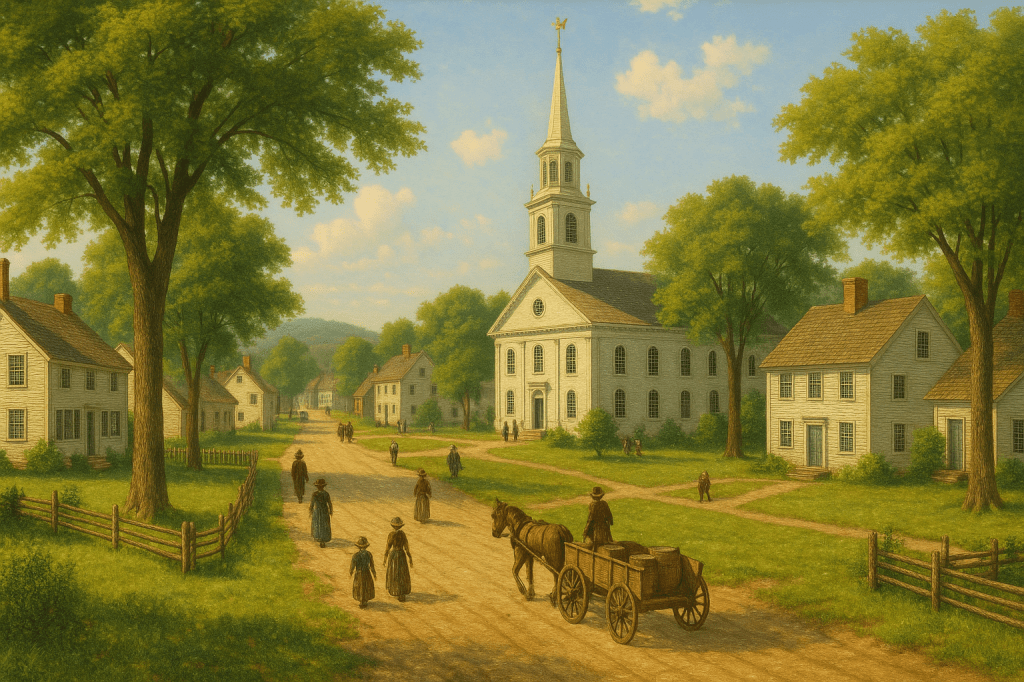
When Jonathan Edwards stepped into pastoral leadership at Northampton in 1729, he was not merely filling the pulpit of his grandfather—he was inheriting a deeply ingrained theological system that blurred the lines between the church and the world. His people were respectable, religious, and devout in appearance. But behind their churchgoing rhythm was a dangerous spiritual slumber, born from years of false assurance rooted in routine sacramentalism.
Edwards did not step into that pulpit as a revolutionary firebrand. In fact, his early years were marked by careful, thoughtful preaching focused on God’s holiness, man’s sinfulness, and the necessity of the new birth. But over time, it became clear that the sheepfold he tended was filled with many who had never been truly born again. They had been catechized, baptized, and brought to the table—many since childhood—but without any evidence of regeneration. Edwards recognized that their greatest danger was not outright rebellion, but unexamined presumption.
This conviction came to a head on July 8, 1741, when Edwards delivered Sinners in the Hands of an Angry God in Enfield, Connecticut—though its thunderclap echoed in Northampton. The sermon wasn’t random fire-and-brimstone rhetoric; it was the spiritual defibrillator his people needed. With vivid imagery and biblical gravity, Edwards portrayed the precariousness of life apart from Christ: sinners dangling by a thread over the fires of God’s righteous judgment.
But what made this sermon so controversial—then and now—was its audience. Edwards wasn’t preaching to pagans; he was preaching to covenant children, pew-sitters, moralists, and table-partakers. He saw that many of them were relying on outward signs rather than inward renewal. He was calling them to examine themselves—not merely for formality’s sake, but for their souls’ salvation.
His pastoral task was not to uphold tradition but to expose the error within it. Edwards loved his people enough to trouble their consciences. He longed for them to exchange empty ritual for authentic repentance. In confronting the spiritual lethargy of his congregation, he was not undermining his grandfather’s legacy to be spiteful—he was attempting to restore biblical fidelity where sentimental theology had taken root.
Revival, in Edwards’ view, would never come by softening the truth. It would come only when sinners awoke to their true condition and fled to Christ—not a cup of wine—for mercy.
IV. The Half-Way Covenant and Its Modern Descendants
To fully grasp the danger Jonathan Edwards confronted, one must consider the theological soil from which it grew: the Half-Way Covenant. Introduced in 1662, this compromise was born of pastoral anxiety. As fewer second-generation Puritans professed saving faith, ministers faced a dilemma—either withhold the sacraments from an increasing number of baptized children, or redefine what church membership meant.
Many chose the latter.
The Half-Way Covenant permitted baptized, yet unconverted, individuals to become partial church members and have their own children baptized. It was a theological concession that slowly decayed the holiness of the church. What began as an attempt to retain cultural unity became a breeding ground for nominalism. Baptism became a badge of citizenship, not of regeneration. And over time, the Lord’s Supper—originally reserved for the regenerate—was increasingly opened to all who outwardly conformed.
Solomon Stoddard took this a step further, arguing that the Lord’s Table could be a converting ordinance, and that excluding “morally upright” unbelievers from it was unjust. His rationale was built more on pragmatism and personal experience than on Scripture. His famous claim of being converted at the communion table set the precedent for inviting others to seek the same—and it provided theological cover for widening the gate even further.
This same logic finds new life in certain modern practices, particularly among advocates of paedocommunion—the idea that young, unexamined children of believers should partake in the Lord’s Supper based solely on their covenant status. One prominent voice in this movement is Douglas Wilson, who has publicly defended the practice within the broader framework of “covenantal objectivity.” While Wilson and others may not explicitly cite Stoddard, their conclusions align: access to the table is based on association, not necessarily on regeneration.
But Scripture does not allow this. Paul’s warning in 1 Corinthians 11 makes it clear: “Let a person examine himself, then, and so eat of the bread and drink of the cup” (v. 28). The requirement for self-examination presumes self-awareness, discernment, and faith—things that are not present in the unconverted or the undeveloped conscience of a young child.
Just as the Half-Way Covenant attempted to preserve religious heritage at the cost of doctrinal clarity, so too do modern revisions of the Supper obscure the line between the church and the world. But God’s ordinances are not to be reinvented in the name of inclusion. They are to be guarded with fear, reverence, and obedience to His Word.
V. The Biblical Witness: The Lord’s Supper as Covenant Renewal for the Regenerate
God has not left us without instruction concerning who may partake in the Lord’s Supper. The Apostle Paul, writing under the inspiration of the Holy Spirit, addresses this explicitly in 1 Corinthians 11. Far from being a casual ritual or sentimental gesture, the Lord’s Table is a holy ordinance—a moment of covenant renewal between Christ and His redeemed people. It is not a tool for evangelism. It is not a rite of passage. It is not an invitation to the curious or the carnal.
“Let a person examine himself, then, and so eat of the bread and drink of the cup. For anyone who eats and drinks without discerning the body eats and drinks judgment on himself.” (1 Cor. 11:28–29, ESV)
These are sobering words. Paul warns that to come to the table without examination, without spiritual discernment, is to invite God’s judgment—not His grace. The Supper does not convert; it confirms. It does not save; it seals what is already true of the believer’s union with Christ. In this way, the Supper serves as a visible gospel for the regenerate—a means of strengthening faith, not initiating it.
To invite the unregenerate, the unrepentant, or the unexamined to the table is to profane the very blood it represents. The church is not authorized to distribute the body and blood of Christ to those who remain at enmity with Him. No parent can presume their child’s salvation and feed them Christ as if the elements are magic. No elder or pastor can neglect the biblical warning out of fear of being “unwelcoming.” Christ Himself is the one who fences the table—with the words of Scripture.
The Lord’s Supper is a covenant meal—echoing the covenant meals of the Old Testament, where only those in right standing with God could come. To eat at God’s table is to declare communion with Him. And communion requires union. Therefore, the Table is for the regenerate—those who have been born again, who are trusting in Christ alone for salvation, and who are walking in repentance and faith.
Any other practice turns the Supper into a lie, offering peace where there is no peace and strengthening false assurance rather than true hope.
VI. False Assurance and the Danger of Sentimental Sacramentalism
False assurance is perhaps the most terrifying spiritual condition one can possess: to believe one is at peace with God while remaining under His wrath. And no doctrine has contributed more to this condition than sentimental sacramentalism—the idea that participation in religious ordinances automatically conveys grace or secures standing before God.
This error, deeply embedded in Solomon Stoddard’s theology and perpetuated today in various forms, turns the holy ordinances of God into spiritual trinkets. When the Lord’s Supper is treated as an evangelistic tool or a family tradition rather than a covenantal affirmation of faith, it communicates a lie: that you can commune with Christ without being united to Him. That grace is dispensed without repentance. That covenant inclusion is inherited by bloodline rather than confirmed by the Spirit.
This is precisely what Paul condemned in 1 Corinthians 11. The Corinthian church was treating the Supper lightly—some with drunkenness, others with division, all without the required self-examination. And Paul does not rebuke them gently. He warns that those who eat and drink “without discerning the body” are bringing judgment upon themselves (v. 29). Some, he says, have grown weak and sick, and some have even died as a result (v. 30). God takes His ordinances seriously—even when His people do not.
Yet modern ministers—whether intentionally or not—continue the legacy of error when they extend the Table to the unregenerate. Some do it by encouraging children to partake simply because they’ve been baptized. Others do it by removing church discipline and opening the Table to anyone who “feels welcome.” In both cases, sentimentality replaces Scripture. The desire to be inclusive overrides the command to be holy.
But the Table is not a place of indiscriminate grace; it is a place of covenant renewal for those whose hearts have been circumcised by the Spirit. To invite the unconverted is to reinforce their delusion. To hand them the bread and cup without urging them to examine themselves is to lead them into a deeper spiritual fog.
Edwards saw this clearly. He knew that no tradition, no rite, no family connection could replace the miracle of regeneration. That is why he preached as he did—not to be harsh, but to be honest. The souls of his people were too precious to comfort with a lie.
We would do well to recover that same clarity today.
VII. A Call for Ministerial Courage and Biblical Fidelity
Jonathan Edwards was not driven by arrogance or theological novelty when he resisted his grandfather’s legacy—he was driven by a trembling fear of God and a burning love for the souls entrusted to him. In a time when spiritual formalism reigned, Edwards stood as a herald of truth, willing to sever tradition for the sake of fidelity. His refusal to permit unconverted individuals to the Lord’s Table, especially children and cultural Christians, eventually cost him his pulpit. Yet it secured something far greater: a testimony of ministerial integrity that still convicts and instructs the church today.
We need that same courage now.
Too many pastors, in an attempt to be palatable or “pastoral,” have lost sight of the sacred responsibility entrusted to them. Instead of guarding the Lord’s Table as a place of reverent renewal, they treat it like a family potluck where the only requirement is a seat at the table. But Scripture calls ministers to be shepherds, not hosts—protectors of Christ’s sheepfold, not appeasers of religious tradition.
Biblical fidelity often demands conflict with cherished customs, even those established by beloved predecessors. Edwards loved his grandfather, but he loved Christ more. He respected Stoddard, but he revered Scripture more. His ministry was marked by a willingness to offend man if it meant honoring God.
Today, ministers must resolve to do the same. We must preach the new birth—not as a suggestion, but as a necessity. We must guard the ordinances—not out of fear of man, but out of fear of the Lord. And we must be willing to say no—to parents, elders, and even denominational pressures—if the alternative is violating God’s Word.
The church is not preserved by sentiment, but by Scripture. And the Lord’s Table, rightly guarded, becomes a powerful means of grace for the believer—and a sober warning to the unrepentant.
Let us, then, follow in Edwards’ steps. Not by mimicking his eloquence or intensity, but by sharing his unwavering commitment to truth. May we preach repentance, guard the ordinances, and love our flocks enough to fence the Table with the gate God Himself has set in place: the new birth.
VIII. Conclusion: A Table Worth Guarding
July 8th should not merely be remembered for the emotional impact of Sinners in the Hands of an Angry God. It should be remembered as the day Jonathan Edwards fired a pastoral cannonball through the inherited assumptions of his age. He stood beneath the weight of a compromised legacy—his own grandfather’s legacy—and chose faithfulness to Christ over familial sentiment or cultural pressure. That choice cost him his ministry at Northampton, but it preserved the witness of the gospel for generations to come.
At the heart of Edwards’ ministry was a relentless desire to see true conversions, not manufactured ones. He understood that religious activity could lull people into a deadly sense of security, and that few errors were more destructive than offering spiritual assurance to those who had never truly repented. The communion table, for him, was not a means of evangelism—it was a place for the regenerate to remember Christ’s death, renew their covenant, and examine their hearts before God.
Today, the church faces similar temptations. We live in a time where doctrinal boundaries are often softened in the name of inclusion, and where sentimentality masquerades as compassion. But if we truly love our people—our children, our congregations, our communities—we will not offer them a false peace. We will not hand them the cup of the covenant without first calling them to the cross of Christ.
The legacy of Sinners in the Hands of an Angry God is not its rhetoric, but its resolve. It reminds us that revival begins with truth. That love tells the hard truths. That the ordinances of God are not ours to reinvent—but His to be obeyed.
We honor Edwards—not by admiring his boldness—but by following his example: guarding the Table, preaching the necessity of the new birth, and trusting that God uses faithfulness—not popularity—to build His church.
In an age of compromise, may we be known not as innovators, but as stewards. May we feed the flock, not flatter them. And may the Table of the Lord be once again seen for what it is: a holy meal for a holy people, bought with the holy blood of Christ.
Throughout history, the outward expressions of faith have often served as visible markers of deeper theological and cultural convictions. One such tradition, often overlooked, is the growing of beards among Reformed churchmen, a practice deeply rooted in the legacy of the Protestant Reformers—Martin Luther, John Calvin, and John Knox. These men, pillars of the Reformation, chose to grow out their beards as an act of protest against the Roman Catholic Church’s insistence that monks remain clean-shaven.
However, this was more than mere defiance—it was a declaration of biblical manhood and a theological statement that stood against the constraints of enforced celibacy. By allowing their beards to grow, these Reformers expressed a clear affirmation of marriage, family, and the priesthood of all believers. Today, in an era saturated with promiscuity, libertinism, and a distortion of biblical masculinity, the resurgence of bearded Reformed men could once again serve as a sign of commitment—not only to historic Protestant faith but also to the God-ordained institutions of marriage and fatherhood.
The Beard as a Sign of Reformation Heritage
To understand the significance of beards in the Reformed tradition, one must look at the historical context in which the Reformers lived. In the Roman Catholic Church of the Middle Ages, monks were required to shave their faces as a sign of their celibacy and devotion to their order. The act of shaving symbolized their separation from the world and their renunciation of marriage. The Reformers, in their opposition to monasticism and the unbiblical enforcement of clerical celibacy, deliberately embraced their beards as a means of differentiation.
John Knox, the fiery Scottish Reformer, wore his beard long as a sign of his identity as a preacher of God’s Word and a married man. John Calvin, known for his meticulous theological writings, also bore a beard as a reflection of his adherence to biblical norms rather than Catholic traditions. Even Martin Luther, who was once an Augustinian monk, let his beard grow as a declaration of his newfound biblical conviction that clergy should marry, as Paul instructed in 1 Timothy 3:2: “An overseer must be the husband of one wife.”
In this way, the beard became more than just a stylistic choice; it was a visual affirmation of biblical fidelity and a rejection of man-made restrictions on God’s design for marriage and family.
A Symbol for the Modern Churchman
In today’s society, Christian men who seek marriage and fatherhood often find themselves swimming against a cultural tide that promotes casual relationships, extended adolescence, and an aversion to responsibility. The biblical model of manhood—one of leadership, provision, and commitment to family—is increasingly seen as archaic, if not outright oppressive.
Growing a beard, while certainly not a requirement for godliness, can serve as a small but significant marker of one’s alignment with historic Christian convictions. In the same way that the Reformers used their beards to signify their rejection of clerical celibacy and their embrace of marriage, modern Reformed men can use their beards as a testimony to their commitment to biblical masculinity, marriage, and the raising of godly offspring.
The Biblical View of Beards and Manhood
Scripture itself speaks positively of beards as a symbol of dignity and wisdom. In Leviticus 19:27, God commanded the Israelites not to cut the edges of their beards, distinguishing them from the surrounding pagan nations. In 2 Samuel 10:4-5, the humiliation of David’s servants was marked by the shaving of their beards, signifying a loss of honor.
While the New Testament does not command the growing of beards, it is evident that in the cultural and biblical mindset, a man’s beard often signified maturity, wisdom, and respectability. In light of this, the act of growing a beard today can be a reflection of a desire to embrace biblical patterns of manhood in a world that often seeks to blur the distinctions between the sexes.
Reclaiming the Beard as a Counter-Cultural Statement
The world today is marked by a radical departure from biblical principles. The sexual revolution has devalued marriage, encouraged promiscuity, and led many young men to abandon their God-given responsibilities. The Apostle Paul warns against such times in 2 Timothy 3:1-5, describing a generation that would be “lovers of self, lovers of money, proud, arrogant, disobedient to their parents, ungrateful, unholy, heartless…”
Christian men must respond by embracing biblical counter-cultural symbols—signs that mark them as distinct from the world’s wayward trends. Just as the Reformers grew out their beards as a sign of defiance against enforced celibacy and as an affirmation of marriage, modern Reformed men can reclaim this tradition as a declaration of their desire to marry, raise children, and lead their households in godliness.
This is not to say that every Christian man must grow a beard to prove his faithfulness. But in a time when masculinity itself is under attack, tangible symbols can serve as important reminders—both to ourselves and to those around us—of our commitment to biblical principles. A full, well-groomed beard can stand as an emblem of a man’s devotion to his faith, his family, and his role as a leader within the home and the church.
Conclusion: More Than Facial Hair
While the beard itself holds no salvific power, its historical and theological significance should not be overlooked. In the time of the Reformers, it was a mark of defiance against an unbiblical suppression of marriage. Today, it can serve as a mark of defiance against a culture that devalues marriage, promotes immorality, and seeks to efface biblical masculinity.
Growing a beard as a Christian man is not about legalism or empty symbolism—it is about identifying with a heritage of biblical conviction and a vision of godly manhood. It is a small but meaningful way to declare, “I stand with the Reformers. I stand with the biblical vision of marriage and family. I stand for Christ.”
So, to the modern Reformed man considering whether to grow out his beard, let it be a reminder of your theological heritage, your commitment to biblical manhood, and your desire to honor God in all aspects of life—including how you present yourself to the world.



 Reformed Faith Insights