What is the measure of a man? This question has echoed across the ages—from ancient prophets to modern philosophers. For some, like Friedrich Nietzsche, the answer lies in the invention of a new kind of man altogether—a “Superman” who rises above morality, crushes weakness, and redefines good and evil through sheer willpower. His Zarathustra descends from the mountains not with a word from God, but with a message that God is dead—and that man must now become his own savior.
But Scripture offers a radically different vision. When Moses descended from Mount Sinai, his face shone—not with self-made glory, but with the reflected holiness of God. He was not a man declaring himself divine, but a servant who had spoken with the Lord “face to face, as a man speaks to his friend” (Exodus 33:11). The ideal man is not one who exalts himself, but one who bows low in reverence before his Creator.
Dr. Martyn Lloyd-Jones once said, “The ultimate trouble with man is not intellectual, it is moral. Man wants to be his own god.” And this, in the end, is what divides Moses and Zarathustra. One is called by God to lead and obey; the other invents meaning in rebellion. This is a battle not just of philosophies, but of destinies.
Zarathustra and the Übermensch: A Man Made of Smoke
Friedrich Nietzsche’s Thus Spoke Zarathustra is a manifesto for the death of God and the rise of the “Übermensch” — the “Superman” or “Overman” who is strong enough to cast off all traditional values and create his own morality. Zarathustra is Nietzsche’s prophetic figure, descending from the mountain not to bring God’s Word, but to announce that man must become more than man. “Man is a rope,” he declares, “stretched between the animal and the Übermensch—a rope over an abyss.”
This abyss is moral nihilism—the void left when God is rejected and man becomes his own measure. There is no law from above, no divine image to reflect, only a future to conquer through power, autonomy, and self-invention. It is the echo of Eden’s ancient lie: “You shall be like God.”
Dr. Martyn Lloyd-Jones warned against precisely this kind of thinking:
“Man in sin always wants to make himself a god… and that is the greatest sin of all.”
Zarathustra is not a hero; he is a mirror of fallen man’s rebellion—an attempt to ascend by severing all ties to the holy. But without God, the superman becomes smoke—weightless, unstable, and ultimately perishing. The rope Nietzsche speaks of is frayed, and the abyss is real. What we need is not ascent through willpower, but revelation from above.
Moses: The True Man of God
Moses stands as a towering figure in redemptive history—not because of personal greatness, but because he was a man who walked with God. Scripture introduces him not as a philosopher, warrior, or revolutionary, but as “the servant of the Lord” (Deut. 34:5). His greatness was not in casting off divine authority, but in submitting to it. When he came down from Mount Sinai, his face shone—not with self-created glory, but because he had stood in the presence of God (Exodus 34:29).
Dr. Martyn Lloyd-Jones emphasized this repeatedly in his preaching:
“The glory seen in Moses was not the result of effort, meditation, or genius—it was the result of communion with God.”
Moses was a man utterly dependent on the Lord. When offered the Promised Land without God’s presence, he refused: “If Your Presence does not go with us, do not bring us up from here” (Exodus 33:15). Unlike Zarathustra, Moses did not forge ahead in his own strength—he pled for mercy, interceded for a rebellious people, and humbled himself under God’s mighty hand.
Even his death was marked by divine intimacy. Deuteronomy tells us that “the Lord buried him” (Deut. 34:6), and that no prophet like him arose again—until Christ. Moses did not transcend manhood; he embodied what manhood should be: a humble vessel of the Word, made radiant by the glory of Another.
The Glory from Above vs. the Will from Within
At the heart of the contrast between Moses and Zarathustra lies a deeper theological divide: Where does true glory come from? For Nietzsche’s Zarathustra, glory arises from within—by the force of will, by rejecting weakness, and by transcending the old morality. His path is self-assertion. His creed is self-exaltation. His god is himself.
But Moses, by contrast, is not climbing a mountain to discover himself—he is summoned by God to receive what man could never imagine or attain on his own. The glory that radiated from Moses’ face was not a reward for personal strength. It was grace. It was the result of divine encounter, not human achievement. As Paul writes in 2 Corinthians 3:7, “the Israelites could not gaze at Moses’ face because of its glory, which was being brought to an end.”
Dr. Martyn Lloyd-Jones puts it this way:
“There is all the difference in the world between a man who is trying to make himself great and a man who has been made great by God.”
Zarathustra calls men to strive upward by their own strength. But Moses bows low and is lifted by the hand of the Almighty. One seeks a crown through self-will. The other receives it through obedience. The one boasts in the flesh; the other hides in the cleft of the rock until the glory of God passes by. One shines with pride, the other with grace.
The Law and the Lie: Moral Authority vs. Moral Nihilism
When Moses descended from Mount Sinai, he carried with him two tablets of stone—engraved by the very finger of God (Exodus 31:18). These were not suggestions or evolving social constructs; they were absolute moral laws, rooted in the holy character of the Creator. God did not ask Moses to invent morality—He revealed it. Moses stood before the people as a mediator, not a moral innovator.
Contrast this with Nietzsche’s Zarathustra, who declares that the old values are dead and that man must now create his own. “What is good? Whatever increases the feeling of power. What is evil? Whatever springs from weakness.” Here lies the foundation of Nietzsche’s moral nihilism: without God, there is no fixed law. Right and wrong are merely tools of the strong, shaped by the will to power.
Dr. Martyn Lloyd-Jones saw this as the most dangerous lie of modern man:
“The law of God humbles us, it convicts us, and it drives us to Christ. But the man who rejects that law makes himself his own god—and that is the essence of sin.”
Zarathustra’s gospel is a gospel with no sin, no standard, and no Savior. But the law that came through Moses is a mirror that shows us our guilt—and points us to grace. It is not a cage, but a compass. It condemns so that it might lead us to the One who fulfilled it perfectly: Jesus Christ.
Christ, Not the Superman
If Moses reveals the shape of godly manhood, then Christ fulfills it in perfection. He is not a man who casts off the law but one who “did not come to abolish the Law or the Prophets, but to fulfill them” (Matthew 5:17). He is not driven by the will to power but by the will of His Father. The path of Christ is not upward self-exaltation but downward humility: “He humbled Himself by becoming obedient to the point of death, even death on a cross” (Philippians 2:8).
Zarathustra’s Superman scorns such humility. For him, pity is weakness and sacrifice is foolishness. But for Christ, meekness is strength. In His Sermon on the Mount, the true image of manhood is displayed: “Blessed are the poor in spirit… the meek… the merciful… the pure in heart” (Matthew 5:3–8). As Dr. Martyn Lloyd-Jones put it in his commentary on this passage:
“The world says, ‘Assert yourself.’ The gospel says, ‘Deny yourself.’ The world says, ‘Be strong, stand up for yourself.’ Christ says, ‘Blessed are the meek.’”
Zarathustra offers a man who rules. Christ offers a man who serves. Zarathustra seeks dominion. Christ stoops to wash feet. The one climbs upward in vain pride; the other descends in glorious humility. And because of that descent, God has highly exalted Him (Phil. 2:9). In the end, it is not the Superman who reigns—but the Son of Man.
Revival or Ruin: What We Need Today
Our generation is caught in a quiet crisis. We are surrounded by the language of empowerment, self-realization, and “becoming your best self”—but it is all the recycled philosophy of Zarathustra. The modern world tells us to look within, to define truth for ourselves, to cast off all restraint and “live our truth.” We are told that weakness is shameful and that dependence is bondage. But this is not progress—it is ruin.
Dr. Martyn Lloyd-Jones diagnosed this condition long before our time:
“Man’s greatest need is not education or information. His greatest need is a new heart, and only God can give it.”
What we need is not stronger men, but broken men made whole by grace. We need men who tremble at God’s Word, who ascend not the mountain of ego but the hill of the Lord with clean hands and a pure heart (Psalm 24:3–4). We do not need another Zarathustra—we need faithful men like Moses. We need men who seek God’s glory, not their own.
And ultimately, we need revival. Not just in the culture, but in the church. Revival comes not when man lifts himself up, but when he bows low. Lloyd-Jones declared, “The ultimate answer is the presence of God among His people.” And that Presence comes not to those who boast in their own strength, but to those who cry out, “Show me Your glory.”
Choose Your Mountain
At the end of it all, we are faced with a choice—not just a philosophical one, but a deeply spiritual one. Will we ascend the mountain of self like Zarathustra, declaring our autonomy and casting off the cords of divine authority? Or will we, like Moses, climb the mountain at God’s command, remove our shoes in reverence, and plead, “Show me Your glory” (Exodus 33:18)?
The mountain of Zarathustra is high and proud—but it is hollow. It offers no law, no gospel, no atonement. It leads not to life, but to madness. Indeed, Nietzsche himself, the prophet of the Superman, spent his final years in insanity—a tragic irony for one who declared the death of God and the birth of a new man.
By contrast, the mountain of Moses trembles with fire and thunder, but it is where God speaks. It is where man learns his place, not by casting off his creatureliness, but by embracing it. And even Moses—great as he was—points beyond himself. As Hebrews 3:5–6 tells us, “Moses was faithful in all God’s house as a servant… but Christ is faithful over God’s house as a Son.”
This is the true and final glory: not that man becomes a god, but that God became a man. And in Christ—the greater Moses—we see the perfect image of manhood: humble, holy, obedient, sacrificial, radiant with the very glory of God (John 1:14).
So the question remains: Which mountain will you choose? The peak of pride, where you stand alone in your illusion of power? Or the mount of revelation, where you fall on your face and are lifted by grace?
In the end, it is not Zarathustra who stands in glory, but Moses—because Moses stood with God.
And Christ alone shines brighter still.
🗣️ I’d love to hear from you!
If this post stirred your thoughts, challenged your worldview, or encouraged your faith, I invite you to share your reflections in the comments below. Let’s keep the conversation going.
Prefer a more personal connection? Feel free to send me an email with your thoughts or questions — I read every message.
On July 10, 1509, in the small cathedral town of Noyon, France, a child was born who would grow to become one of the most influential theologians and church reformers in the history of Christianity—John Calvin. Though his life would be marked by exile, controversy, and sickness, Calvin’s relentless pursuit of God’s truth would shape not only the course of the Protestant Reformation, but also the worship, polity, and doctrine of countless churches around the world. On the anniversary of his birth, we do well to pause, not to glorify the man, but to give thanks to God for the ways He used a humble scholar from northern France to ignite theological clarity and spiritual renewal that still resonates centuries later.
Calvin’s theological system is best known through his magnum opus, The Institutes of the Christian Religion—a work that he first published at the age of 26 and continued to revise throughout his life until the definitive edition of 1559. But Calvin was more than a theologian; he was a pastor, a biblical commentator, and above all, a servant of Christ’s church. He insisted that theology must never be abstract but always devotional and practical: “True and sound wisdom consists of two parts: the knowledge of God and of ourselves” (Battles ed., Institutes, 1.1.1). This reciprocal knowledge—of who God is and who we are in relation to Him—forms the heartbeat of Calvin’s spiritual vision.
Even in the opening lines of the Institutes, Calvin displays a deep humility before the majesty of God. “Without knowledge of self,” he writes, “there is no knowledge of God” (Beveridge ed., Institutes, 1.1.1). Yet he is quick to reverse the mirror: “It is evident that man never attains to a true self-knowledge until he has previously contemplated the face of God, and come down after such contemplation to look into himself” (Beveridge ed., Institutes, 1.1.2). For Calvin, the knowledge of God is not a cold academic pursuit, but a furnace that refines and humbles. We behold the holiness of God, and then see how stained and needy we are in contrast.
Calvin’s theology is often misrepresented as dry, distant, and austere. Yet those who take time to read him will encounter someone deeply committed to the warmth of divine love and the assurance of God’s grace. Calvin writes, “Our being should not be under the dominion of ourselves, but we should live entirely to the Lord and die to him” (Battles ed., Institutes, 3.7.1). From this, the Christian life becomes not a rigid checklist of doctrine, but a responsive life of joyful obedience rooted in love for God.
His pastoral vision extended far beyond academic theology. Calvin spent his life building up the church in Geneva, despite multiple exiles, illnesses, and opposition. He preached sermons daily, taught students, visited the sick, and labored for the moral and spiritual renewal of the city. One of his most powerful legacies is not just what he taught, but how he lived under the Lordship of Christ. “We are not our own,” he writes, “therefore, let us live for him and die for him” (Beveridge ed., Institutes, 3.7.1).
And yet, Calvin’s own awareness of human weakness and divine sovereignty kept him grounded. He described the human heart as “a perpetual forge of idols” (Beveridge ed., Institutes, 1.11.8) and pointed readers constantly away from their own works to rest in the finished work of Christ. “Until men recognize that they owe everything to God,” he writes, “that they are nourished by his fatherly care, that he is the Author of their every good—until they humble themselves completely and strip themselves of all self-confidence—they will never give him his due” (Battles ed., Institutes, 1.1.1).
So, on this July 10th, we remember John Calvin not as a flawless man or a distant intellectual, but as a faithful servant of Christ who labored so that others might see the greatness of God. As he once prayed, “I offer my heart to you, O Lord, promptly and sincerely.” That motto—Cor meum tibi offero, Domine, prompte et sincere—still echoes today. May his life invite us to deeper reverence, humility, and faith in our sovereign and gracious God.
II. Calvin the Theologian: Institutes and a Vision of God’s Glory
If Martin Luther cracked open the door of the Reformation, John Calvin stepped through it and built a theological house to dwell in. His Institutes of the Christian Religion is not only the most influential Reformed work of systematic theology, but one of the most enduring and expansive theological texts in the history of the church. Written originally in 1536 and revised over two decades until its final form in 1559, the Institutes was Calvin’s attempt to give “a sum of piety” and a “doctrine that is necessary to know” (Battles ed., Prefatory Address). It was, in Calvin’s words, “a key to open a way for all children of God into a right and true understanding of Holy Scripture” (Beveridge ed., Prefatory Address).
From the first page to the last, Calvin’s theology revolves around one central aim: the glory of God in the salvation of sinners. The famous opening lines declare that “true and sound wisdom consists of two parts: the knowledge of God and of ourselves” (Battles ed., Institutes, 1.1.1). This twofold knowledge sets the framework for everything that follows. God is sovereign, holy, and utterly self-sufficient; man is fallen, needy, and dependent. Theology, then, is not an abstract science, but a practical discipline meant to drive the heart into awe, reverence, and trust.
Calvin’s emphasis on the sovereignty of God is one of the defining marks of his theology. This does not begin with the controversial doctrine of predestination, but with the very nature of God as Creator and Sustainer of all things. “Nothing is more absurd,” Calvin writes, “than that anything should be done without God’s ordination, because it happens against his will” (Beveridge ed., Institutes, 1.16.6). Providence is not a cold determinism, but the comforting assurance that not even a sparrow falls apart from the Father’s hand.
In matters of salvation, Calvin’s theological clarity is most vibrant. He saw man as spiritually dead apart from grace, incapable of seeking God or choosing righteousness on his own. “Original sin,” Calvin writes, “seems to be a hereditary depravity and corruption of our nature” which renders us “obnoxious to God’s wrath” (Battles ed., Institutes, 2.1.8). Yet it is in this helpless state that the mercy of God shines brightest. Election, for Calvin, is not a theological abstraction but a testimony of divine love: “God has adopted us once for all in order that we may persevere to the end” (Battles ed., Institutes, 3.21.7).
Calvin’s doctrine of union with Christ brings warmth and cohesion to his soteriology. Every saving benefit—justification, sanctification, adoption—is received in Christ and through the Spirit. “As long as Christ remains outside of us,” Calvin insists, “and we are separated from him, all that he has suffered and done for the salvation of the human race remains useless and of no value to us” (Battles ed., Institutes, 3.1.1). Faith is the Spirit-given bond that unites the believer to Christ, and this union is both legal (justification) and transformative (sanctification).
Far from promoting a dry orthodoxy, Calvin taught that true theology always issues in piety, which he defined as “that reverence joined with love of God which the knowledge of his benefits induces” (Battles ed., Institutes, 1.2.1). The goal of doctrine is not simply to inform but to ignite the heart. Theology is not merely for the scholar but for the worshiper. “It is evident,” Calvin writes, “that man never attains to a true self-knowledge until he has previously contemplated the face of God” (Beveridge ed., Institutes, 1.1.2). To know God rightly is to be changed by Him inwardly.
The scope of the Institutes is enormous—covering topics from Scripture’s authority, to the Trinity, to civil government—but it is always tethered to one central concern: that God be honored and glorified, and that sinners find refuge in Christ. Whether Calvin is describing the majesty of God’s law or the depths of the atonement, he writes with a pastor’s heart and a theologian’s mind. He leaves no room for self-confidence, but points again and again to the sufficiency of Christ and the majesty of grace.
In a world often intoxicated with autonomy and self-justification, Calvin’s vision remains radically God-centered. “Man is so blinded by pride,” he writes, “that he counts himself sufficient to obtain righteousness” (Beveridge ed., Institutes, 3.12.2). But Calvin knew better, and he called the church to look upward—to the sovereign God, to the crucified Christ, to the Spirit who gives life. That vision, born in the pages of the Institutes, still gives light to pilgrims who long to see the face of God.
III. Calvin’s Ecclesiology: A Church Reformed and Always Reforming
For John Calvin, the doctrine of the church was not an afterthought but a vital branch of Christian theology. He believed that God’s redemptive work in the world was not merely individual but corporate—centered in the visible body of Christ, the church militant on earth. As one who labored tirelessly for ecclesiastical reform in Geneva, Calvin saw the reformation of the church as the necessary outworking of the gospel’s renewal. The purified preaching of the Word and the right administration of the sacraments were, for him, not just ecclesial duties—they were marks of the true church.
Calvin famously defined the church in these terms:
“Wherever we see the word of God purely preached and heard, and the sacraments administered according to Christ’s institution, there, it is not to be doubted, a church of God exists.” (Battles ed., Institutes, 4.1.9)
This twofold standard—Word and sacrament—was Calvin’s measuring rod for authentic Christian community. He rejected both the spiritual individualism that severed Christians from the visible church and the corrupted institutionalism of the medieval church, which had obscured the gospel with superstition and abuse. In Geneva, he sought to restore the church to biblical fidelity, not by innovation, but by recovery—a return to apostolic simplicity and purity.
One of Calvin’s most significant contributions to ecclesiology was his reformation of church government. He taught that Christ alone is the Head of the church, and under Him are four offices established for its upbuilding: pastors, teachers (doctors), elders, and deacons. These roles were grounded in Scripture, particularly in Ephesians 4 and 1 Timothy 3. Calvin resisted any form of hierarchy that elevated one office above the rest—especially the monarchical papacy—calling it a “tyranny” inconsistent with the New Testament church.
“There is no other rule for the right government of the church than that which he [Christ] has laid down in his word.” (Beveridge ed., Institutes, 4.8.9)
The pastors were responsible for preaching and administering the sacraments; the teachers ensured doctrinal integrity; the elders oversaw the moral and spiritual conduct of the flock; and the deacons cared for the poor and needy. Calvin’s Geneva Consistory, made up of pastors and elders, exercised church discipline, not to tyrannize consciences, but to maintain the holiness of the church and shepherd straying sheep back to Christ.
Church discipline, in Calvin’s view, was not optional but essential. He wrote:
“As the saving doctrine of Christ is the soul of the church, so discipline forms the ligaments which connect the members together, and keep each in its proper place.” (Beveridge ed., Institutes, 4.12.1)
He understood discipline as both corrective and restorative—an expression of love, not legalism. A church that failed to practice discipline would, in Calvin’s mind, quickly become spiritually diseased and indistinguishable from the world. “Discipline,” he warned, “is like a bridle to restrain and tame those who rage against the doctrine of Christ” (Battles ed., Institutes, 4.12.1).
The Lord’s Supper, too, held a central place in Calvin’s ecclesiology. While rejecting Roman transubstantiation and Lutheran consubstantiation, Calvin taught that believers are truly nourished by the real spiritual presence of Christ through faith. The Supper is not a bare symbol, but a means of grace, binding the church together in union with Christ. As Calvin wrote:
“The sacred mystery of the Supper consists in the spiritual reality of that communion which we have with Christ in his flesh and blood, and with all his members.” (Battles ed., Institutes, 4.17.1)
For Calvin, the visible church was not perfect, but it was necessary. “The church is the mother of all believers,” he declared, “for there is no other way to enter into life unless she conceive us in her womb, give us birth, nourish us at her breast, and lastly…keep us under her care and guidance” (Battles ed., Institutes, 4.1.4). Though plagued with faults, the church remains God’s chosen instrument to proclaim the gospel, train disciples, and extend the kingdom.
This ecclesiological vision became foundational to Presbyterian polity and Reformed churches worldwide. Its genius was in balancing local authority with biblical accountability, structure with spiritual vitality. Calvin’s model aimed to recover not just doctrinal purity, but also pastoral care and community holiness—reforming the church according to the Word of God.
In our fragmented age, Calvin’s vision is a call to recover the high view of the church as Christ’s body, governed by His Word, sustained by His grace, and reformed continually by His Spirit. The ecclesia reformata semper reformanda—“the church reformed and always reforming”—is not a slogan of progressivism, but a commitment to ongoing repentance and fidelity to Scripture.
IV. Calvin and the Dutch Reformed Tradition
Though John Calvin never stepped foot in the Netherlands, his theological vision became the bedrock of Dutch Reformed Christianity for generations. His influence in the Low Countries was not merely intellectual—it was deeply ecclesiastical, political, and spiritual. Through his writings, students, and the spread of Reformed confessions, Calvin’s theology shaped the identity of a people who would become known for their commitment to doctrinal clarity, personal piety, and confessional fidelity.
The Dutch Reformation, like other Protestant movements, began as a response to the theological and moral corruption of the medieval church. But while Lutheranism made early inroads, it was Calvinism that ultimately captured the Dutch heart. What drew the Dutch to Calvin’s thought was not just his doctrine of predestination or his critique of Rome, but his robust vision of God’s sovereignty over every sphere of life—a vision particularly compelling in a nation struggling for religious and political freedom under Catholic Spain.
Calvin’s Geneva Academy played a pivotal role in training future Dutch ministers and theologians. Students such as Zacharias Ursinus, Caspar Olevianus, and Franciscus Junius carried Calvin’s theology back to the Netherlands, where they became instrumental in shaping the early Reformed churches. The Dutch quickly developed their own expressions of Calvinistic thought, culminating in the Three Forms of Unity: the Belgic Confession (1561), the Heidelberg Catechism (1563), and the Canons of Dort (1619). Each of these documents bears the clear imprint of Calvin’s theology—especially in its view of Scripture, the church, human depravity, and divine election.
The most defining moment of Calvin’s impact in the Netherlands came with the Synod of Dort (1618–1619). This international Reformed council was convened to respond to the rise of Arminianism, a movement that challenged Calvin’s teachings on grace and predestination. The Synod reaffirmed the doctrines Calvin championed, particularly unconditional election, limited atonement, and irresistible grace—forming what would later be remembered as the Five Points of Calvinism or TULIP.
Although Calvin never systematized his theology into five points, his Institutes contain the heart of these doctrines. Regarding election, he wrote:
“We say, then, that Scripture clearly proves this much, that God by his eternal and immutable counsel determined once for all those whom he would one day admit to salvation, and those whom he would condemn to destruction.” (Beveridge ed., Institutes, 3.21.7)
Calvin did not present election as a cold decree, but as a source of assurance and worship. He emphasized that election is rooted not in human worthiness but solely in God’s mercy and purpose:
“If we are elected in Christ, we shall find in him the assurance of our election.” (Battles ed., Institutes, 3.24.5)
The Dutch Reformed churches adopted this Christ-centered understanding of predestination, maintaining a strong sense of God’s covenant love and the believer’s security in Christ.
Calvin’s influence also extended to church polity and liturgy in the Netherlands. Dutch Reformed churches followed a Presbyterian model of governance, with ministers and elders sharing responsibility in consistories. Worship services centered on preaching, prayer, psalm singing, and the sacraments—echoing Calvin’s desire for simplicity and biblical faithfulness. “God disapproves all modes of worship not expressly sanctioned by his Word,” Calvin warned (Beveridge ed., Institutes, 4.10.23). The Dutch heeded that warning, developing a liturgy that was reverent, didactic, and saturated with Scripture.
Calvin’s understanding of the Christian life also resonated with the Dutch. His call to live “coram Deo”—before the face of God—was not confined to the church pew but extended into the home, the marketplace, and the government. This worldview would later give rise to a distinctively Reformed cultural vision championed by Dutch theologians like Abraham Kuyper, who famously declared, “There is not a square inch in the whole domain of our human existence over which Christ, who is Sovereign over all, does not cry, ‘Mine!’”
In Calvin’s words:
“The Lord bids each one of us in all life’s actions to look to his calling. For he knows with what great unrest the human mind is borne hither and thither… So that no one may thoughtlessly transgress his limits, he has named these various kinds of living ‘callings.’” (Battles ed., Institutes, 3.10.6)
This doctrine of vocation—rooted in Calvin’s theology—took deep root in the Netherlands, producing generations of believers committed to faithfulness in both church and society.
Today, Dutch Reformed theology continues to shape churches across the world, from the Netherlands to South Africa, from Canada to the United States. While the landscape of Reformed churches has diversified, the DNA of Calvin’s Geneva remains unmistakable. His vision for a church under the Word, a life lived before God, and a kingdom extending into every area of life continues to animate and guide faithful believers across the centuries.
V. Calvin’s Spiritual Legacy Among the English Puritans and Scottish Presbyterians
Though John Calvin’s ministry was rooted in Geneva, his influence surged beyond the borders of continental Europe—especially into England, Scotland, and eventually America. The English Puritans and the Scottish Presbyterians adopted and adapted Calvin’s theology, shaping movements that would impact the course of Christian history for centuries. In them, Calvin found not only eager readers but spiritual heirs—men and women who embraced his theology of God’s sovereignty, covenantal worship, and a life lived under the lordship of Christ.
Calvin’s relationship to the English Reformation was both direct and providential. During the reign of Mary I (“Bloody Mary”), many English Protestants fled persecution and found refuge in Geneva. These Marian exiles—including John Knox and others—were exposed firsthand to Calvin’s ecclesiastical reforms and theological writings. When they returned to England under Elizabeth I, they brought with them not just ideas, but a vision: a purified church governed by the Word of God alone.
The Puritans, as they came to be known, were not a monolith but a movement marked by zeal for biblical fidelity. They longed to see the Church of England further reformed in worship, doctrine, and discipline. Calvin’s Institutes provided them with a comprehensive theological framework rooted in Scripture and aimed at producing a godly people. His doctrine of total depravity, effectual calling, and covenantal obedience were all embraced and preached from English pulpits. One Puritan minister declared that the Institutes was the “greatest work written since the days of the apostles.”
Calvin’s understanding of the Christian life as one of ongoing repentance and sanctification resonated with Puritan spirituality. He wrote:
“The whole life of Christians ought to be a sort of practice of godliness.” (Beveridge ed., Institutes, 3.6.5)
The Puritans adopted this ethos wholeheartedly, emphasizing family worship, Sabbath observance, self-examination, and spiritual disciplines—not as legalism, but as the outworking of a regenerate heart. The Puritan mind, while scholastic in training, was deeply pastoral. They sought what Calvin called the experientia of grace—the lived experience of Christ’s sanctifying work through Word and Spirit.
In Scotland, Calvin’s legacy was most visibly realized through John Knox, a fiery reformer who spent time in Geneva under Calvin’s tutelage. Knox called Geneva “the most perfect school of Christ that ever was on the earth since the days of the apostles.” Upon returning to Scotland, Knox helped establish a national church modeled closely after Calvin’s vision: eldership rule, simple liturgy, expository preaching, and a high view of God’s sovereign grace.
This gave birth to Scottish Presbyterianism, which enshrined many of Calvin’s principles into enduring institutional forms. The First Book of Discipline (1560) and the Second Book of Discipline (1578) reflected Calvin’s influence in church polity and doctrine. But perhaps the fullest flowering came in the Westminster Assembly (1643–1653), where English and Scottish theologians crafted the Westminster Confession of Faith—a document deeply Calvinistic in tone and structure.
Calvin’s theology of God’s sovereign grace was at the heart of Westminster’s statements on predestination, justification, sanctification, and perseverance. The Assembly echoed his understanding that salvation is entirely by divine mercy:
“As Scripture, when it speaks of our free election, removes all merit on our part, so it enjoins humility, and deprives man of all pretext for glorying.” (Battles ed., Institutes, 3.21.2)
The English Puritans and Scottish Presbyterians did not worship Calvin. But they saw in him a guide—a shepherd-theologian who had faithfully taught the Word of God and called the church to holiness. They passed his theology on to future generations, including the American Puritans, who planted Calvinistic doctrine deep into the soil of New England. Preachers like Jonathan Edwards carried the torch forward, preaching the majesty of God and the weight of eternal things with Calvin’s deep sense of reverence.
Even today, Calvin’s fingerprints are visible in Reformed confessions, Presbyterian polity, and Reformed seminaries across the world. Wherever Christ is preached with awe, and the Scriptures are held in highest esteem, Calvin’s legacy quietly endures. As he wrote near the end of his Institutes:
“Let us not cease to do the utmost, that we may incessantly go forward in the way of the Lord… until we shall at length arrive at the goal.” (Beveridge ed., Institutes, 3.6.5)
Calvin never desired to be known as a reformer, but as a humble servant of the Word. And in the Puritans and Presbyterians, we see the fruit of that humble obedience—a church reformed by the Scriptures and aflame with a passion for the glory of God.
VI. Calvin’s Broader Cultural and Ecumenical Impact
John Calvin is best known as a theologian of grace and a reformer of the church, but his impact reaches far beyond the pulpit or the seminary. His influence has permeated realms as varied as education, politics, economic theory, and global Christianity. He was a man of the Word, to be sure—but his vision of God’s sovereignty over all of life made him a forerunner of what we now call a Christian worldview. Calvin believed that all creation belongs to God, and that every domain of human endeavor must come under Christ’s lordship. In this way, his legacy is not only ecclesial but cultural—and not only Reformed but ecumenical.
Calvin’s doctrine of providence undergirded his view of the world as an ordered, purposeful creation governed by God’s sovereign hand. He wrote:
“The Lord has so knit together the order of the world, that nothing can be done without his will or permission.” (Beveridge ed., Institutes, 1.16.6)
Far from promoting fatalism, this conviction gave Calvin confidence that every part of life—science, labor, law, and art—had meaning under the reign of Christ. This notion would later fuel Protestant work ethic theories, particularly in sociologist Max Weber’s famous thesis that Calvinism contributed to the rise of capitalism by dignifying secular work as a calling (Beruf).
But Calvin was not an economist; he was a pastor and theologian who saw all of life as “coram Deo”—before the face of God. In this light, work, study, and civic duty were all to be performed with reverence and responsibility. He declared:
“The Lord bids each one of us in all life’s actions to look to his calling… so that no one may thoughtlessly transgress his limits.” (Battles ed., Institutes, 3.10.6)
This doctrine of vocation elevated the ordinary. Calvin taught that the farmer behind his plow and the magistrate behind his desk both served Christ as meaningfully as the preacher in his pulpit, provided they acted in faith and obedience.
Calvin also placed a strong emphasis on education, founding the Geneva Academy in 1559 to train both ministers and lay leaders in the Word of God. Literacy was central, since the people of God needed to read Scripture for themselves. This emphasis helped usher in a culture of learning and critical thinking across Protestant Europe. In time, Reformed schools, universities, and seminaries were established throughout the world—from Princeton and Yale in America to Stellenbosch in South Africa.
In terms of politics, Calvin’s legacy is complex but significant. He was not a champion of popular sovereignty, but his insistence that all human authority is derived from God and accountable to Him laid the theological groundwork for resistance to tyranny and the rise of constitutional governance. Calvin insisted:
“We are subject to the men who rule over us, but only in the Lord; if they command anything against Him, let us not pay the least regard to it.” (Beveridge ed., Institutes, 4.20.32)
This principle—known as the doctrine of lesser magistrates—was later employed by Reformed resistance movements across Europe and helped influence early American political thought, particularly among Calvinist dissenters.
Perhaps most surprisingly, Calvin’s influence reaches into ecumenical Christianity as well. Though his theology was distinctively Reformed, his emphasis on Scripture, grace, and the majesty of God has resonated with Christians from diverse traditions. In the 20th and 21st centuries, Calvin has been read not only by Presbyterians and Dutch Reformed churches, but by Baptists, Anglicans, Methodists, and even Roman Catholics. The rise of evangelical Calvinism in recent decades—seen in the ministries of figures like J.I. Packer, R.C. Sproul, and John Piper—demonstrates that Calvin’s voice still speaks powerfully to a global audience hungry for doctrinal depth and spiritual integrity.
Moreover, many Reformed churches in the Global South—particularly in Africa, Asia, and Latin America—trace their theological lineage to Calvin, either through missionary influence or indigenous adoption. These churches are now among the fastest-growing segments of the global church. In 2010, more than 80 million believers belonged to the World Communion of Reformed Churches, a testimony to Calvin’s global reach.
And yet, Calvin himself would be the last to seek credit. He labored not to exalt his name, but to exalt the name of Christ. As he wrote:
“We should consider that the principal end of our lives is to be so reconciled to God, and to devote ourselves wholly to him, that his glory may shine forth in us.” (Beveridge ed., Institutes, 3.6.6)
In every generation, Calvin calls the church back to God-centered worship, grace-filled theology, and lives lived for the glory of Christ in every sphere. That is why, even five centuries later, his vision continues to inspire and shape the global church—ever reformed, ever reforming.
VII. Why We Still Need John Calvin
In an age defined by theological confusion, spiritual consumerism, and institutional instability, the life and legacy of John Calvin remain remarkably relevant. Born over five hundred years ago, Calvin was not interested in novelty, popularity, or building a personal brand. He was captivated by the majesty of God, the authority of Scripture, and the glory of Christ in the church. And he labored—quietly, often painfully—for the rest of his life so that the truth of God might reign in the hearts of His people. Today, we still need John Calvin—not because he was perfect, but because he was faithful.
Calvin reminds us that theology is not a mere intellectual exercise but a matter of life and death. He begins his Institutes by showing that true wisdom begins with knowing God and knowing oneself rightly:
“Our wisdom, in so far as it ought to be deemed true and solid wisdom, consists almost entirely of two parts: the knowledge of God and of ourselves.” (Battles ed., Institutes, 1.1.1)
In an age obsessed with self-expression and self-fulfillment, Calvin redirects our gaze upward. We are not autonomous individuals floating in a meaningless cosmos; we are creatures made by a holy God, corrupted by sin, and in need of redemption. The recovery of this twofold knowledge—of God’s majesty and man’s misery—is as vital today as it was in Calvin’s time.
Calvin also reminds us that the church matters. In a world where church attendance is declining and institutional distrust is on the rise, Calvin’s robust vision of the visible church stands as a countercultural testimony. The church, he insists, is the mother of believers, the household of faith, and the place where God nourishes His people:
“There is no other way to enter into life unless she [the church] conceive us in her womb, give us birth, nourish us at her breast, and lastly…keep us under her care and guidance.” (Battles ed., Institutes, 4.1.4)
His commitment to preaching, sacraments, discipline, and godly leadership is not about control but care—about forming a people devoted to God and conformed to Christ.
Perhaps most importantly, Calvin reminds us of the supremacy of God’s grace. In his view, salvation is not the result of our striving or achievements but the free mercy of a sovereign God. This was not cold fatalism—it was the burning center of Christian assurance and joy. “We are elected in Christ,” Calvin wrote, “and we shall find in him the assurance of our election” (Battles ed., Institutes, 3.24.5). Far from producing arrogance, this truth should lead to humility and worship. As Calvin put it:
“Let us not be ashamed to be ignorant in something, or not to succeed in everything. Let us be content to be learners in Christ’s school until the end.” (Beveridge ed., Institutes, Prefatory Address)
This is why Calvin’s legacy lives on. He did not set out to build a movement; he sought only to be faithful to the Word of God. Yet his vision reshaped nations, emboldened reformers, instructed generations of believers, and gave the church a theological foundation that still stands today.
Calvin’s personal motto, which he used in correspondence and had engraved in his heart, was this:
“Cor meum tibi offero, Domine, prompte et sincere”—“I offer my heart to you, O Lord, promptly and sincerely.”
That is a fitting summary of his life. Not self-centered ambition, but joyful surrender. Not innovation for its own sake, but faithfulness to God’s Word. Calvin’s enduring relevance is found not in the age of his books, but in the timelessness of the truth he taught. And though he is often caricatured as austere or severe, those who read him with care will discover a man full of pastoral tenderness and spiritual insight.
So on this July 10th, let us remember John Calvin not as a distant relic of the past, but as a gift of Christ to His church. Let his words reawaken our awe of God. Let his vision rekindle our love for Scripture. Let his example encourage us to live sincerely, courageously, and reverently—before the face of God, in the power of His grace, and for the glory of His name.
“For since we are not our own, in so far as we can, let us forget ourselves and all that is ours.” —John Calvin (Beveridge ed., Institutes, 3.7.1)
On July 8th, 1741, Jonathan Edwards delivered what would become the most famous sermon in American history—Sinners in the Hands of an Angry God. It has been memorialized in textbooks as a quintessential fire-and-brimstone message, one of terror and trembling. But what’s often overlooked is why Edwards felt compelled to preach such a piercing word of warning.
This sermon was not merely about evoking fear. It was a desperate plea from a pastor who had inherited a congregation steeped in false assurance. That assurance had a name and a history—it began with Edwards’ own grandfather, Solomon Stoddard. Stoddard was a towering figure in New England’s religious life, and one of his most controversial legacies was the promotion of what might be called “communion table conversion.” He taught that the Lord’s Supper was not only a means of grace for the converted, but a tool to awaken faith in the unconverted. For Stoddard, the table was open to all, even those who gave no evidence of regeneration.
This theological experiment planted seeds of spiritual complacency. Instead of preaching repentance and the new birth, many ministers under Stoddard’s influence extended the sacraments to unrepentant hearts. Church membership and table fellowship became cultural inheritances, not covenantal realities. In short, people were told they belonged to Christ without being born again.
Jonathan Edwards would not have it.
When Edwards stepped into the pulpit on that hot July day, he did so to awaken a people lulled to sleep by ritual and sentimentality. Sinners in the Hands of an Angry God was not a random burst of Puritan wrath—it was a surgical strike against generations of theological compromise. It was a call to true conversion, to flee from the wrath to come and lay hold of Christ by faith—not by presumption.
In this post, I want to trace the roots of this problem, expose its modern equivalents, and renew the call to guard the Lord’s Table with reverence, as Scripture commands.
II. The Stoddardian Legacy: A Faulty Foundation
To understand the urgency and weight of Jonathan Edwards’ ministry, we must look backward—not just to Scripture, but to the spiritual inheritance he received from his grandfather, Solomon Stoddard. Stoddard served as pastor of Northampton’s Congregational Church for over 60 years and was one of the most influential religious figures in colonial New England. His towering presence shaped not only the ecclesiology of his local congregation, but also the theological climate of the region.
But beneath his reputation for revivalism lay a troubling innovation: the opening of the Lord’s Supper to the unconverted. Stoddard taught that the sacraments could function as “converting ordinances”—that participation in communion could lead to, or even result in, a person’s saving faith. This marked a significant departure from the historic Reformed understanding, which reserved the table for those who had already professed faith and shown signs of regeneration.
What followed was a widening of the church’s gates without a corresponding call to the narrow path of repentance and faith. Baptized individuals, many without any credible testimony of conversion, were encouraged to partake of the Supper. Stoddard himself claimed to have been converted at the communion table—an experience that gave theological legitimacy to his practice. But this personal testimony, however sincere, was elevated to ecclesial policy, creating generations of churchgoers who confused sacramental participation with saving grace.
The result was tragic: a church culture where many presumed they were safe simply because they were present. Assurance of salvation was no longer tethered to the inward work of the Spirit, but to outward observance. The Lord’s Table, intended as a memorial for the redeemed, had become an altar for the unregenerate.
By the time Jonathan Edwards assumed leadership of the Northampton church, he found himself preaching to a congregation largely inoculated against the gospel by Stoddard’s innovations. The spiritual complacency he faced was not accidental—it was inherited. And Edwards, with pastoral courage and deep reverence for the holiness of God, saw that revival would not come without first dismantling the very system his grandfather had built.
III. Edwards’ Inheritance: A Congregation Needing Awakening
When Jonathan Edwards stepped into pastoral leadership at Northampton in 1729, he was not merely filling the pulpit of his grandfather—he was inheriting a deeply ingrained theological system that blurred the lines between the church and the world. His people were respectable, religious, and devout in appearance. But behind their churchgoing rhythm was a dangerous spiritual slumber, born from years of false assurance rooted in routine sacramentalism.
Edwards did not step into that pulpit as a revolutionary firebrand. In fact, his early years were marked by careful, thoughtful preaching focused on God’s holiness, man’s sinfulness, and the necessity of the new birth. But over time, it became clear that the sheepfold he tended was filled with many who had never been truly born again. They had been catechized, baptized, and brought to the table—many since childhood—but without any evidence of regeneration. Edwards recognized that their greatest danger was not outright rebellion, but unexamined presumption.
This conviction came to a head on July 8, 1741, when Edwards delivered Sinners in the Hands of an Angry God in Enfield, Connecticut—though its thunderclap echoed in Northampton. The sermon wasn’t random fire-and-brimstone rhetoric; it was the spiritual defibrillator his people needed. With vivid imagery and biblical gravity, Edwards portrayed the precariousness of life apart from Christ: sinners dangling by a thread over the fires of God’s righteous judgment.
But what made this sermon so controversial—then and now—was its audience. Edwards wasn’t preaching to pagans; he was preaching to covenant children, pew-sitters, moralists, and table-partakers. He saw that many of them were relying on outward signs rather than inward renewal. He was calling them to examine themselves—not merely for formality’s sake, but for their souls’ salvation.
His pastoral task was not to uphold tradition but to expose the error within it. Edwards loved his people enough to trouble their consciences. He longed for them to exchange empty ritual for authentic repentance. In confronting the spiritual lethargy of his congregation, he was not undermining his grandfather’s legacy to be spiteful—he was attempting to restore biblical fidelity where sentimental theology had taken root.
Revival, in Edwards’ view, would never come by softening the truth. It would come only when sinners awoke to their true condition and fled to Christ—not a cup of wine—for mercy.
IV. The Half-Way Covenant and Its Modern Descendants
To fully grasp the danger Jonathan Edwards confronted, one must consider the theological soil from which it grew: the Half-Way Covenant. Introduced in 1662, this compromise was born of pastoral anxiety. As fewer second-generation Puritans professed saving faith, ministers faced a dilemma—either withhold the sacraments from an increasing number of baptized children, or redefine what church membership meant.
Many chose the latter.
The Half-Way Covenant permitted baptized, yet unconverted, individuals to become partial church members and have their own children baptized. It was a theological concession that slowly decayed the holiness of the church. What began as an attempt to retain cultural unity became a breeding ground for nominalism. Baptism became a badge of citizenship, not of regeneration. And over time, the Lord’s Supper—originally reserved for the regenerate—was increasingly opened to all who outwardly conformed.
Solomon Stoddard took this a step further, arguing that the Lord’s Table could be a converting ordinance, and that excluding “morally upright” unbelievers from it was unjust. His rationale was built more on pragmatism and personal experience than on Scripture. His famous claim of being converted at the communion table set the precedent for inviting others to seek the same—and it provided theological cover for widening the gate even further.
This same logic finds new life in certain modern practices, particularly among advocates of paedocommunion—the idea that young, unexamined children of believers should partake in the Lord’s Supper based solely on their covenant status. One prominent voice in this movement is Douglas Wilson, who has publicly defended the practice within the broader framework of “covenantal objectivity.” While Wilson and others may not explicitly cite Stoddard, their conclusions align: access to the table is based on association, not necessarily on regeneration.
But Scripture does not allow this. Paul’s warning in 1 Corinthians 11 makes it clear: “Let a person examine himself, then, and so eat of the bread and drink of the cup” (v. 28). The requirement for self-examination presumes self-awareness, discernment, and faith—things that are not present in the unconverted or the undeveloped conscience of a young child.
Just as the Half-Way Covenant attempted to preserve religious heritage at the cost of doctrinal clarity, so too do modern revisions of the Supper obscure the line between the church and the world. But God’s ordinances are not to be reinvented in the name of inclusion. They are to be guarded with fear, reverence, and obedience to His Word.
V. The Biblical Witness: The Lord’s Supper as Covenant Renewal for the Regenerate
God has not left us without instruction concerning who may partake in the Lord’s Supper. The Apostle Paul, writing under the inspiration of the Holy Spirit, addresses this explicitly in 1 Corinthians 11. Far from being a casual ritual or sentimental gesture, the Lord’s Table is a holy ordinance—a moment of covenant renewal between Christ and His redeemed people. It is not a tool for evangelism. It is not a rite of passage. It is not an invitation to the curious or the carnal.
“Let a person examine himself, then, and so eat of the bread and drink of the cup. For anyone who eats and drinks without discerning the body eats and drinks judgment on himself.” (1 Cor. 11:28–29, ESV)
These are sobering words. Paul warns that to come to the table without examination, without spiritual discernment, is to invite God’s judgment—not His grace. The Supper does not convert; it confirms. It does not save; it seals what is already true of the believer’s union with Christ. In this way, the Supper serves as a visible gospel for the regenerate—a means of strengthening faith, not initiating it.
To invite the unregenerate, the unrepentant, or the unexamined to the table is to profane the very blood it represents. The church is not authorized to distribute the body and blood of Christ to those who remain at enmity with Him. No parent can presume their child’s salvation and feed them Christ as if the elements are magic. No elder or pastor can neglect the biblical warning out of fear of being “unwelcoming.” Christ Himself is the one who fences the table—with the words of Scripture.
The Lord’s Supper is a covenant meal—echoing the covenant meals of the Old Testament, where only those in right standing with God could come. To eat at God’s table is to declare communion with Him. And communion requires union. Therefore, the Table is for the regenerate—those who have been born again, who are trusting in Christ alone for salvation, and who are walking in repentance and faith.
Any other practice turns the Supper into a lie, offering peace where there is no peace and strengthening false assurance rather than true hope.
VI. False Assurance and the Danger of Sentimental Sacramentalism
False assurance is perhaps the most terrifying spiritual condition one can possess: to believe one is at peace with God while remaining under His wrath. And no doctrine has contributed more to this condition than sentimental sacramentalism—the idea that participation in religious ordinances automatically conveys grace or secures standing before God.
This error, deeply embedded in Solomon Stoddard’s theology and perpetuated today in various forms, turns the holy ordinances of God into spiritual trinkets. When the Lord’s Supper is treated as an evangelistic tool or a family tradition rather than a covenantal affirmation of faith, it communicates a lie: that you can commune with Christ without being united to Him. That grace is dispensed without repentance. That covenant inclusion is inherited by bloodline rather than confirmed by the Spirit.
This is precisely what Paul condemned in 1 Corinthians 11. The Corinthian church was treating the Supper lightly—some with drunkenness, others with division, all without the required self-examination. And Paul does not rebuke them gently. He warns that those who eat and drink “without discerning the body” are bringing judgment upon themselves (v. 29). Some, he says, have grown weak and sick, and some have even died as a result (v. 30). God takes His ordinances seriously—even when His people do not.
Yet modern ministers—whether intentionally or not—continue the legacy of error when they extend the Table to the unregenerate. Some do it by encouraging children to partake simply because they’ve been baptized. Others do it by removing church discipline and opening the Table to anyone who “feels welcome.” In both cases, sentimentality replaces Scripture. The desire to be inclusive overrides the command to be holy.
But the Table is not a place of indiscriminate grace; it is a place of covenant renewal for those whose hearts have been circumcised by the Spirit. To invite the unconverted is to reinforce their delusion. To hand them the bread and cup without urging them to examine themselves is to lead them into a deeper spiritual fog.
Edwards saw this clearly. He knew that no tradition, no rite, no family connection could replace the miracle of regeneration. That is why he preached as he did—not to be harsh, but to be honest. The souls of his people were too precious to comfort with a lie.
We would do well to recover that same clarity today.
VII. A Call for Ministerial Courage and Biblical Fidelity
Jonathan Edwards was not driven by arrogance or theological novelty when he resisted his grandfather’s legacy—he was driven by a trembling fear of God and a burning love for the souls entrusted to him. In a time when spiritual formalism reigned, Edwards stood as a herald of truth, willing to sever tradition for the sake of fidelity. His refusal to permit unconverted individuals to the Lord’s Table, especially children and cultural Christians, eventually cost him his pulpit. Yet it secured something far greater: a testimony of ministerial integrity that still convicts and instructs the church today.
We need that same courage now.
Too many pastors, in an attempt to be palatable or “pastoral,” have lost sight of the sacred responsibility entrusted to them. Instead of guarding the Lord’s Table as a place of reverent renewal, they treat it like a family potluck where the only requirement is a seat at the table. But Scripture calls ministers to be shepherds, not hosts—protectors of Christ’s sheepfold, not appeasers of religious tradition.
Biblical fidelity often demands conflict with cherished customs, even those established by beloved predecessors. Edwards loved his grandfather, but he loved Christ more. He respected Stoddard, but he revered Scripture more. His ministry was marked by a willingness to offend man if it meant honoring God.
Today, ministers must resolve to do the same. We must preach the new birth—not as a suggestion, but as a necessity. We must guard the ordinances—not out of fear of man, but out of fear of the Lord. And we must be willing to say no—to parents, elders, and even denominational pressures—if the alternative is violating God’s Word.
The church is not preserved by sentiment, but by Scripture. And the Lord’s Table, rightly guarded, becomes a powerful means of grace for the believer—and a sober warning to the unrepentant.
Let us, then, follow in Edwards’ steps. Not by mimicking his eloquence or intensity, but by sharing his unwavering commitment to truth. May we preach repentance, guard the ordinances, and love our flocks enough to fence the Table with the gate God Himself has set in place: the new birth.
VIII. Conclusion: A Table Worth Guarding
July 8th should not merely be remembered for the emotional impact of Sinners in the Hands of an Angry God. It should be remembered as the day Jonathan Edwards fired a pastoral cannonball through the inherited assumptions of his age. He stood beneath the weight of a compromised legacy—his own grandfather’s legacy—and chose faithfulness to Christ over familial sentiment or cultural pressure. That choice cost him his ministry at Northampton, but it preserved the witness of the gospel for generations to come.
At the heart of Edwards’ ministry was a relentless desire to see true conversions, not manufactured ones. He understood that religious activity could lull people into a deadly sense of security, and that few errors were more destructive than offering spiritual assurance to those who had never truly repented. The communion table, for him, was not a means of evangelism—it was a place for the regenerate to remember Christ’s death, renew their covenant, and examine their hearts before God.
Today, the church faces similar temptations. We live in a time where doctrinal boundaries are often softened in the name of inclusion, and where sentimentality masquerades as compassion. But if we truly love our people—our children, our congregations, our communities—we will not offer them a false peace. We will not hand them the cup of the covenant without first calling them to the cross of Christ.
The legacy of Sinners in the Hands of an Angry God is not its rhetoric, but its resolve. It reminds us that revival begins with truth. That love tells the hard truths. That the ordinances of God are not ours to reinvent—but His to be obeyed.
We honor Edwards—not by admiring his boldness—but by following his example: guarding the Table, preaching the necessity of the new birth, and trusting that God uses faithfulness—not popularity—to build His church.
In an age of compromise, may we be known not as innovators, but as stewards. May we feed the flock, not flatter them. And may the Table of the Lord be once again seen for what it is: a holy meal for a holy people, bought with the holy blood of Christ.
“To be right with God the Judge is a great thing, but to be loved and cared for by God the Father is greater.” — J.I. Packer, Knowing God
The Forgotten Member of the Trinity
Among the persons of the Trinity, it is often the Father who remains most misunderstood—or tragically misrepresented. The Son we see in the Gospels, walking among us, touching the leper, dying on the cross. The Spirit we experience inwardly, as the Helper, guiding, convicting, and comforting. But God the Father? To many, He remains distant. Remote. Abstract. A hard figure cloaked in glory—more throne than heart.
But this is not how Scripture presents Him. In fact, the entire redemptive plan begins and ends with the love of the Father. The Father sends the Son (John 3:16). The Father pours out the Spirit (Acts 2:33). The Father adopts us into His family (Ephesians 1:4–5). To know the Father is to taste the very fountainhead of love.
And yet, many of us project our worst assumptions onto Him.
Not Like Kronos: The Devouring Father
In the myths of the ancient Greeks, Kronos, the titan-father of Zeus, devoured his own children. He feared being overthrown, so he swallowed them one by one. Power and paranoia corrupted his vision of fatherhood. To be a child of Kronos was to be consumed by him.
Some of us view God this way—if not consciously, then instinctively. We think of Him as a relentless taskmaster. A being who crushes with commands. A judge who waits for us to trip up. We fear that He’ll take more than we can bear—that He demands perfection and offers no patience.
But this is not the God and Father of our Lord Jesus Christ. Our Father does not devour; He gives. “He who did not spare his own Son, but gave him up for us all—how will he not also graciously give us all things?” (Romans 8:32). He doesn’t hoard power; He delights to share it. He doesn’t steal joy; He gives it in abundance (John 15:11).
Where Kronos consumed his children to preserve himself, our Father gave of Himself to preserve His children.
Not Like Zeus: The Absentee Father
Zeus, though powerful, was capricious and absent. Aloof from human affairs unless provoked, he ruled from afar, wrapped in clouds and thunderbolts. He was a father by name but not by nurture. His character was undependable, his morality shifting.
Many people, especially those who have known neglect, think of God in these terms. Distant. Cold. Preoccupied. They believe in His existence—but not in His affection. He’s “up there,” they suppose, but not here. Perhaps they think they’re too small for Him to notice—or too sinful for Him to care.
But Jesus corrects us with a whisper: “Your Father knows what you need before you ask Him” (Matthew 6:8). He knows your anxieties. He numbers the hairs of your head. He sees when a sparrow falls—and you are of more value than many sparrows (Luke 12:6–7).
He is not absent. He is “the Father of lights, with whom there is no variation or shadow due to change” (James 1:17). He is near to the brokenhearted (Psalm 34:18). He is our refuge and strength, a very present help in trouble (Psalm 46:1). He is not like Zeus; He never leaves nor forsakes His own.
Not Like Many Earthly Fathers
Even good earthly fathers are flawed. Some raise children with rigidity instead of grace. Others create a home where love feels like a reward instead of a refuge. Some are proud. Some are passive. Some are unstable—emotionally distant one moment, emotionally volatile the next.
For those wounded by such fatherhood, it can feel like an almost impossible task to call God “Father” without flinching.
But God is not like our fathers, either. He is what every earthly father should be and more. He is strong, but never oppressive. Tender, but never indulgent. Present, but never smothering. He disciplines—but always for our good, that we may share His holiness (Hebrews 12:10). He speaks truth—but always in love. He does not provoke His children to wrath, but raises them in nurture and instruction (Ephesians 6:4).
No father on earth is perfect—but our Father in heaven is. And Jesus taught us to pray to Him with those startling words: “Our Father.”
J.I. Packer once wrote, “If you want to judge how well a person understands Christianity, find out how much they make of the thought of being God’s child and having God as their Father.” If we truly understood this—if we believed it down to our bones—everything would change. Our anxieties would dissolve in His presence. Our fears would bend before His promises. Our worth would rest not in what we do, but in whose we are.
The Father Who Sent the Son
At the center of God’s love is the cross. And at the center of the cross is Christ Jesus, the exact imprint of the Father’s nature (Hebrews 1:3).
We often think of the crucifixion only in terms of Jesus. But Scripture says it was “the will of the Lord to crush Him” (Isaiah 53:10). That is, the Father sent the Son—not in anger, but in love.
This is perhaps the most staggering thought in all of Scripture: the Father loved us so deeply, He gave His beloved Son.
Not like Kronos, devouring his own to protect himself.
Not like Zeus, far removed from the cries of earth.
Not like so many of our earthly fathers, uncertain and self-centered.
But like the God who said, “This is my beloved Son, with whom I am well pleased”—and yet did not withhold Him for our sake.
The Wondrous Name: God, The Father
When Moses asked to see God’s glory, God proclaimed His name: “The Lord, the Lord, a God merciful and gracious, slow to anger, and abounding in steadfast love and faithfulness” (Exodus 34:6). This is a God who binds Himself to His people in covenant. A God whose name is not a sword but a song.
And when Jesus rose from the grave, He said to Mary Magdalene, “I am ascending to my Father and your Father, to my God and your God” (John 20:17). That name—Father—has now become our inheritance.
No longer a distant title, it is now our comfort. Our assurance. Our anchor.
To be a Christian is to know God not only as Creator, King, and Judge—but as Abba, Father. The Spirit within us cries out this very name (Romans 8:15), teaching us to approach the throne not in terror but in trust.
His name is Father—and not merely metaphorically, but eternally. Before the foundation of the world, He was the Father loving the Son. And now, through the Son, we are brought into that love.
Come to the Father
So come.
Come not to Kronos, who consumes, nor to Zeus, who forgets.
Come not to the memory of your earthly father, however broken or beautiful it may be.
Come to the Father of our Lord Jesus Christ. Come to the one who runs to meet prodigals, who clothes them in robes, and who says, “This my son was dead, and is alive again!” (Luke 15:24).
Come to the Father of lights. The Father of mercy. The Father of glory. The Father who names you His own and never lets you go.
He is not like them. He is better. Infinitely better.
In a world saturated with filters, half-truths, and guarded motives, honesty shines like a rare jewel. And when it comes to marriage, few qualities are more essential. I long for a wife who will speak truth in love—who will not hide behind pretense or pride, but will live and speak with integrity. In the Bible, one woman who embodied that kind of courageous honesty is Esther, the queen who risked everything to save her people.
Though her story is often told as a tale of royal favor or divine providence, at its heart is a woman who chose to be honest when deception would have been safer. She was placed in a high position not to remain silent, but to speak—faithfully, wisely, and truthfully.
Let’s walk through the life of Esther and discover what godly honesty looks like in a woman—and why that trait is indispensable in a wife.
Esther’s Honesty Was Anchored in Identity
When Esther was brought into King Xerxes’ palace, she concealed her Jewish heritage at the instruction of her cousin Mordecai (Esther 2:10). She didn’t lie—she simply withheld. But when the moment of decision came, hiding was no longer an option.
Mordecai challenged her:
“Who knows whether you have not come to the kingdom for such a time as this?” (Esther 4:14)
At that moment, Esther had to decide: Would she remain hidden and protected? Or would she be honest about who she was and what she believed?
She chose honesty.
A godly woman tells the truth about who she is.
She doesn’t mask her convictions to gain approval. She doesn’t hide in fear. She steps into the light. I want to marry a woman who is not ashamed of who God made her to be. Who lives with transparency—not in reckless exposure, but in Christ-centered clarity.
Esther’s Honesty Required Risk
Esther’s honesty wasn’t cheap. To approach the king uninvited could cost her life. To reveal that she was Jewish, especially when her people were under threat, could bring disgrace or death.
But she responded:
“I will go to the king, though it is against the law, and if I perish, I perish.” (Esther 4:16)
That is the cost of real honesty—it requires courage.
A godly woman doesn’t tell the truth only when it’s safe—she tells the truth because it’s right.
She doesn’t manipulate. She doesn’t twist her words to protect her image. She speaks with grace and courage—even when it’s uncomfortable. That kind of honesty builds trust. That kind of honesty protects a marriage.
Esther’s Honesty Was Timely and Wise
Esther didn’t rush into the king’s presence shouting accusations. She didn’t act impulsively. She waited. She fasted. She prayed. And then she planned.
She invited the king and Haman to two private banquets before revealing the truth. Only then, in a calm and intimate setting, did she say:
“If I have found favor in your sight, O king… let my life be granted me for my wish, and my people for my request.” (Esther 7:3)
Esther was honest—but she was also wise.
A godly woman knows how to speak the truth in the right way at the right time.
She is not abrasive, sarcastic, or harsh. She’s prayerful. She chooses her words with discernment. She doesn’t weaponize truth—she wields it with gentleness.
That’s the kind of honesty I pray for in my future wife. The kind that builds bridges, not walls. That speaks up when needed, but does so in love, not in pride.
Esther’s Honesty Was Redemptive, Not Self-Serving
When Esther told the truth, it wasn’t to save face or win favor—it was to save lives. She didn’t expose Haman for revenge. She exposed evil to bring about justice and redemption.
“For we have been sold, I and my people, to be destroyed, to be killed, and to be annihilated.” (Esther 7:4)
Her honesty was others-focused.
A godly woman’s honesty is meant to heal, not to harm.
She tells the truth to protect, not to control. She confesses her own faults and gently addresses others. Her heart is for restoration, not domination.
In marriage, that kind of honesty is everything. I long for a wife who can say the hard things—not to hurt me, but to love me. Who will hold me accountable with compassion. Who will be honest about her own struggles, and invite me to do the same.
Esther’s Honesty Changed History
Because Esther was willing to speak, the king issued a new decree. The Jewish people were saved. Generations were impacted.
Honesty is never just about the moment—it has ripple effects.
A godly woman’s honesty leaves a legacy.
She raises children in truth. She builds a home where deception dies and grace thrives. She shapes a marriage where both husband and wife are free to be known and loved.
The Kind of Woman I’m Praying For
From Esther’s life, I’ve come to see honesty not as a cold or clinical virtue, but as a courageous, warm, redemptive force. It is the foundation of trust, the fountain of intimacy, and the fruit of reverence for God.
Here is the kind of honest woman I long to marry:
She is truthful about who she is—not performing, but living from her God-given identity.
She is courageous in her convictions—not silenced by fear, but strengthened by faith.
She is wise in her words—not impulsive, but prayerful and thoughtful.
She is redemptive in her honesty—speaking truth for healing, not harm.
She builds legacy through integrity—raising up truth-lovers and leading with grace.
Honesty in a wife will make our home a place of light. A place where secrets don’t fester, where conflict is faced with humility, where truth is not a threat but a treasure.
And may I become the kind of man who invites that honesty—who listens without defensiveness, who confesses without excuse, who speaks with clarity and love.
When many people think about biblical affection, they think only in terms of duty or discipline. But Scripture shows us a far richer and more beautiful picture—one that includes tender physical, emotional, and spiritual expression rooted in covenant love. At the center of this vision is the Shulammite bride in the Song of Solomon.
Though her name is never given, this woman is far from anonymous. She is poetic, passionate, and powerfully expressive. Her story, woven through one of the Bible’s most mysterious and beautiful books, reveals what true affection looks like in a godly woman. She’s not cold, repressed, or indifferent—she is warm, responsive, and expressive. Her love is both pure and passionate.
As a man longing for a wife who embodies this kind of godly affection, I find in her a pattern of the kind of heart, tenderness, and love that blesses both marriage and the soul.
The Shulammite Was Emotionally Expressive
From the very beginning, the bride in the Song of Solomon is not shy about her love. She openly delights in her beloved:
“Let him kiss me with the kisses of his mouth! For your love is better than wine.” (Song of Solomon 1:2)
She doesn’t just endure affection—she longs for it. She’s not reserved or reluctant. Her love is expressive, poetic, and honest. Her emotional connection is not one of mere duty but genuine desire.
A godly woman who is affectionate isn’t emotionally distant. She is emotionally present.
She knows how to say “I love you” with her words, her tone, and her presence. She delights in connection. She expresses joy, sorrow, longing, and loyalty with a full heart.
I desire to marry a woman like that. Not someone ruled by emotion—but someone who gives emotion as a gift. Someone who sees affection as ministry—not manipulation. A woman who builds warmth into the home and speaks love into the soul.
The Shulammite Desired Physical Closeness
In a world where physical affection is often distorted, the Song of Solomon offers a picture of marital desire that is holy, reciprocal, and unashamed:
“His left hand is under my head, and his right hand embraces me!” (Song of Solomon 2:6)
This is not lustful or selfish. It is pure, covenantal intimacy.
She treasures physical closeness—not because it serves her ego, but because it expresses covenant love. Her affection is not manipulative. It is giving.
A godly woman’s physical affection is never cheap—it is consecrated.
In marriage, this kind of physical affection brings healing. It communicates trust, delight, and mutual giving. I long to marry a woman who embraces this view—not avoiding touch, but using it as a way to say “I am yours, and I delight in you.”
The Shulammite Encouraged Her Beloved
Throughout the Song, the Shulammite is not just emotionally or physically affectionate—she is verbally affectionate. She builds up her beloved with her words:
“As an apple tree among the trees of the forest, so is my beloved among the young men.” (Song of Solomon 2:3)
She affirms his uniqueness, his strength, his presence. She is generous in her praise—not in flattery, but in truth.
A godly woman uses words to affirm, not to tear down.
Her affection is not silent. It speaks. It lifts. It reminds her husband that he is seen, respected, and cherished.
A future wife like that is a true treasure—a woman who sees her words as tools for connection, not comparison or critique. I long for a woman whose verbal affection nurtures life in the heart of her husband.
The Shulammite Sought Spiritual Union
Though the Song of Solomon is poetic and sensual, it’s also deeply spiritual. The love between the bride and groom mirrors the deep longing we are meant to have for God—and the intimacy He desires with His people.
The bride often expresses longing in the language of pursuit:
“I sought him whom my soul loves; I sought him, but found him not; I called him, but he gave no answer.” (Song of Solomon 3:1)
This kind of affection transcends circumstance. It’s the soul’s desire to be near—to be joined in covenant, not just physically, but spiritually and emotionally.
A godly woman is affectionate because she loves like God loves—with a pursuing, committed, holistic love.
I pray for a woman like that. One whose heart is tender, not only toward me, but toward Christ. A woman who brings her whole self into the covenant—not withholding parts of her soul, but offering them as a gift.
The Shulammite Was Secure in Her Love
In Song of Solomon 6:3, the bride boldly declares:
“I am my beloved’s and my beloved is mine.”
This is the language of secure affection. She knows who she is. She knows to whom she belongs. She is not grasping, jealous, or controlling. Her affection flows from covenantal security.
Affection without security becomes desperation. But affection with security becomes joy.
That is what I long to experience in marriage—a love that is not based on insecurity or performance, but on covenant commitment. A woman who knows she is loved by God and is free to love me—not to complete herself, but to express the completeness she’s found in Christ.
The Shulammite Reserved Her Affection for Covenant
Throughout the Song of Solomon, there is a repeated refrain:
“Do not arouse or awaken love until it so desires.” (Song of Solomon 2:7; 3:5; 8:4)
The Shulammite is not careless with her affection. She’s not flirtatious or promiscuous. She reserves the deepest parts of herself for the one to whom she is covenanted.
A godly woman doesn’t waste affection on fleeting moments—she saves it for a lasting bond.
That kind of woman doesn’t use her beauty for manipulation or conquest. She saves her kisses, her words, her warmth—for her husband. And in doing so, she makes that love all the more sacred and satisfying.
The Kind of Woman I’m Praying For
The Shulammite bride offers a rare and radiant picture of godly affection—emotional, physical, spiritual, and verbal. I am praying for a future wife who:
Delights in emotional connection and isn’t afraid to express joy, desire, and encouragement
Gives physical affection freely and purely—as a gift, not a tool
Builds up with her words—affirming, blessing, and encouraging
Longs for spiritual closeness and walks in communion with God
Is secure in love, not needy or performative
Guards her heart and affection until covenant makes them safe and sacred
I don’t desire a passionless partnership. I desire a vibrant, joyful, affectionate union—marked by the beauty, warmth, and holiness we see in the Song of Solomon.
And may I become the kind of man who receives that affection with gratitude, returns it with faithfulness, and reflects Christ in the way I love.
“Many waters cannot quench love, neither can floods drown it.” — Song of Solomon 8:7
When thinking about the kind of woman I want to marry, one word that resonates deeply with me is passion—not shallow emotion or erratic energy, but deep, purposeful fire. Passion in a godly woman is not about performance or personality type; it’s about desire rightly directed, about a heart that burns for the things of God and expresses that desire with sincerity, persistence, and faith.
One woman in the Bible who beautifully embodies this kind of passion is Hannah, the mother of the prophet Samuel. Her story is found in 1 Samuel 1–2, and it is a portrait of a woman who longed, wept, prayed, and rejoiced—all with a heart submitted to God. Her passion wasn’t loud or public; it was intimate, enduring, and powerful.
Let’s look at how Hannah’s life demonstrates the kind of passion that makes a woman spiritually alive, emotionally grounded, and worthy of emulation in marriage.
Hannah’s Passionate Heart Was Rooted in Pain and Prayer
When we first meet Hannah, she is in deep distress. She is barren and ridiculed by her husband’s other wife, Peninnah. In a culture where motherhood was often tied to worth, this was a deep sorrow.
“She was deeply distressed and prayed to the Lord and wept bitterly.” (1 Samuel 1:10)
Hannah didn’t bottle up her pain or numb it. She brought it to God. She poured out her soul before the Lord. That is passion—holy, vulnerable, heartfelt.
A passionate woman doesn’t suppress her desires—she surrenders them.
She doesn’t fake happiness or hide behind shallow faith clichés. She comes honestly to God. She believes that He hears. And she keeps coming.
That’s the kind of woman I long to marry: not someone who avoids emotion, but someone who brings it to God. A woman who knows how to weep without becoming bitter. Who hopes without demanding. Who prays with persistence.
Hannah’s Passion Didn’t Turn Into Manipulation
Even though she was desperate for a child, Hannah didn’t try to manipulate her husband or her circumstances. She turned to prayer, not pressure. She made a vow to the Lord—not as a bargaining tool, but as an act of trust.
“O Lord of hosts, if you will indeed look on the affliction of your servant… and give to your servant a son, then I will give him to the Lord all the days of his life.” (1 Samuel 1:11)
Hannah’s passion led to surrender, not control. That’s what sets her apart. Passion isn’t about forcing outcomes; it’s about holding desires with open hands.
A godly woman’s passion is not manipulative—it’s sacrificial.
She desires deeply but trusts God more deeply. She doesn’t pout when things don’t go her way. She doesn’t use her emotions to guilt others. She releases her heart to God.
In marriage, this kind of passion becomes a refuge. It creates a home where desires are expressed, not imposed. Where hope is alive, but humility prevails.
Hannah’s Passion Was Misunderstood—But She Remained Steady
When Eli the priest saw Hannah praying silently and emotionally in the temple, he thought she was drunk.
“How long will you go on being drunk? Put your wine away from you.” (1 Samuel 1:14)
But Hannah didn’t get defensive. She didn’t lash out. She simply and respectfully explained:
“No, my lord, I am a woman troubled in spirit… I have been pouring out my soul before the Lord.” (1 Samuel 1:15)
This shows incredible emotional maturity. She could have taken offense, but she stayed focused. Her passion wasn’t about being seen—it was about seeking God.
True passion doesn’t need to be validated by others—it just needs to be faithful.
I want to marry a woman whose fire for God is steady even when misunderstood. Who doesn’t burn out in the face of false assumptions. Who stays kind under pressure. That kind of inner fire is rare—and beautiful.
Hannah’s Passion Was Answered—and She Gave Back
God heard Hannah’s prayer and gave her a son—Samuel. But what’s most stunning is that she followed through with her vow. She gave him back to the Lord, bringing him to the temple to serve all his days.
“For this child I prayed, and the Lord has granted me my petition… Therefore I have lent him to the Lord.” (1 Samuel 1:27–28)
What kind of passion is this? A love so intense it’s willing to let go. A woman so devoted she offers her answered prayer as worship.
A passionate woman is not possessive. She’s generous.
In marriage, I want to share a life with a woman like that—one who rejoices in the gifts of God but never clings to them more tightly than she clings to Him.
Hannah’s Passionate Heart Became a Song of Praise
In 1 Samuel 2, Hannah breaks out in a song of worship that is one of the most powerful theological poems in the Bible. It celebrates God’s sovereignty, His justice, His care for the weak, and His reversal of the proud.
“My heart exults in the Lord; my horn is exalted in the Lord… There is none holy like the Lord: for there is none besides you.” (1 Samuel 2:1–2)
Her passion wasn’t just for a child. It was for the Lord Himself.
A godly woman’s passion is ultimately about worship.
Her deepest joy isn’t in gifts—it’s in the Giver. She lives with awe, gratitude, and hope. She burns for righteousness. She rejoices in grace. Her heart is alive to God.
That kind of passion in a wife would shape everything—our home, our prayers, our purpose.
The Kind of Woman I’m Praying For
From Hannah’s life, here’s what I’m praying for in a future wife:
A woman who longs deeply—but lays her desires at the feet of Jesus.
A woman who is emotionally honest—but spiritually grounded.
A woman who loves fiercely—but never manipulates.
A woman who stays steady—even when misunderstood.
A woman whose deepest passion is God—not gifts.
In a world of shallow infatuations, fleeting trends, and short-lived zeal, I want a woman with holy passion—a heart set ablaze by the love of God, and a life shaped by faith-filled longing.
And may I be the kind of man who cherishes that fire, fans it, and joins her in a life of worship, longing, and purpose.
“Delight yourself in the Lord, and He will give you the desires of your heart.” — Psalm 37:4
In our age of instant gratification and consumer debt, finding someone who understands biblical stewardship is increasingly rare. But when I think about the kind of woman I long to marry—one who is grounded, stable, and wise with resources—I find a timeless model in the Proverbs 31 woman.
This passage isn’t just about an idealized superwoman. It’s about a faithful, capable woman whose heart is anchored in the fear of the Lord. She is industrious, thoughtful, generous, and prepared. She doesn’t live lavishly or wastefully, yet she’s not stingy either. She knows how to steward what God gives her.
Let’s explore what this passage teaches about financial stewardship, diligence, and frugality—and why these traits are so deeply attractive and godly in a future wife.
She Works Willingly and Diligently
“She seeks wool and flax, and works with willing hands.” (Proverbs 31:13)
The Proverbs 31 woman is not idle or lazy. She takes initiative. She is hands-on, productive, and creative. She doesn’t wait around to be served—she steps in to meet needs. Her work ethic is an act of worship and a blessing to her family.
A Godly Stewardess of Resources: She understands that everything belongs to the Lord. Her labor is not about building her brand—it’s about building her home and honoring God.
This is the kind of woman who knows how to stretch a dollar. She’s resourceful and inventive, not complaining about what she doesn’t have but making the most of what she does.
As a husband, I want to come alongside a woman like that. Someone who sees her daily work—whether at home, in the marketplace, or in ministry—as sacred. Who doesn’t fear hard work. Who delights in contributing to the welfare of her family.
She Plans Ahead and Thinks Practically
“She is like the ships of the merchant; she brings her food from afar.” (Proverbs 31:14)
This woman doesn’t operate in crisis mode. She anticipates needs and plans accordingly. She doesn’t waste resources through poor planning, nor does she panic when supplies run low. Her household can depend on her foresight.
She probably clips coupons today—or budget shops, meal preps, and tracks expenses. Not because she’s legalistic, but because she’s wise.
Frugal, Not Fearful: She saves and spends intentionally. She doesn’t hoard in fear or waste in impulse. She trusts God while exercising careful judgment.
I long to marry a woman like this—not someone ruled by money, but someone who honors God with how she handles it. A woman who sees budgeting as an act of love and stewardship, not drudgery.
She Invests and Multiplies
“She considers a field and buys it; with the fruit of her hands she plants a vineyard.” (Proverbs 31:16)
This is a woman who has business sense. She doesn’t squander what she’s been given—she increases it. Her actions show discernment, discipline, and entrepreneurial spirit.
Whether she works outside the home or manages within it, she doesn’t waste opportunity. She seeks ways to grow what God has entrusted to her.
A Godly Woman Isn’t Passive With Provision: She looks for ways to make a return—not just financially, but spiritually and relationally.
Marrying a woman like this means building a life together that is fruitful. A marriage that multiplies not just income, but impact.
She Clothes Her Household—Not Herself—in Scarlet
“She is not afraid of snow for her household, for all her household are clothed in scarlet.” (Proverbs 31:21)
Her focus is not on vanity, but preparation. She doesn’t prioritize trends or materialism. Her joy is in seeing her family cared for. She clothes others in beauty and protection, not to impress outsiders but to bless those under her care.
Financial Stewardship Shows in What We Prioritize: The Proverbs 31 woman doesn’t spend to keep up appearances. She uses her resources to prepare, protect, and provide.
I want to marry a woman whose purchases reflect her values. Who sees spending not as self-expression but as stewardship. A woman who finds joy in contentment, not comparison.
She Opens Her Hands to the Poor
“She opens her hand to the poor and reaches out her hands to the needy.” (Proverbs 31:20)
This woman isn’t frugal so she can hoard. She’s frugal so she can give. Her stewardship creates margin—not for indulgence but for generosity. She doesn’t just care for her own; she makes room for others.
This is the heart of biblical financial wisdom: freedom to give. She is a cheerful giver because she is a faithful planner.
A Frugal Heart is a Generous One: The woman I long to marry is not tight-fisted, but open-hearted. She sees the needs of others and has the margin—and compassion—to respond.
Her Husband Trusts Her Financially and Personally
“The heart of her husband trusts in her, and he will have no lack of gain.” (Proverbs 31:11)
This woman is trustworthy. She doesn’t blow the budget or hide purchases. Her husband doesn’t have to micromanage her spending. He knows she is faithful in both private and public dealings.
Marriage Requires Financial Trust: A godly marriage is strengthened when both spouses are aligned in stewardship. The Proverbs 31 woman brings confidence, not anxiety, to the relationship.
This is the kind of woman I hope to marry—someone whose sense of responsibility isn’t motivated by pressure but by love. Who manages resources with integrity because she values what God has entrusted to her.
She Fears the Lord Above All
“Charm is deceitful, and beauty is vain, but a woman who fears the Lord is to be praised.” (Proverbs 31:30)
This is the root of it all: Her frugality, her labor, her wisdom, and her generosity all flow from a heart that fears the Lord.
She doesn’t worship money. She worships God.
That kind of heart can be trusted with anything—finances, family, future.
The Kind of Woman I’m Praying For
The Proverbs 31 woman is not just a checklist. She is a picture of grace, wisdom, and strength. Her stewardship flows from love—not legalism. Her diligence is humble. Her frugality is generous.
I’m praying for a wife like her:
Who works diligently—not to earn identity, but to bless her family.
Who plans wisely—not in fear, but with foresight.
Who saves and spends intentionally—not for status, but for stewardship.
Who gives generously—not from abundance, but from conviction.
Who honors the Lord in all she does—with her hands, her heart, and her habits.
And I pray that I would be a man worthy of such a woman—a man who leads, supports, and joins her in stewarding life for the glory of God.
“Give her of the fruit of her hands, and let her works praise her in the gates.” — Proverbs 31:31
In searching for a future wife, one of the most precious qualities I’ve come to value is flexibility—a gracious spirit that walks with others through their mess, struggles, and growth without contempt. In our age of judgmental comparison, self-righteous virtue signaling, and harsh online “discernment,” this trait is rare. But the Bible gives us shining examples of women who embraced the hard road of grace rather than the easy route of superiority. Chief among them is Mary Magdalene.
Mary’s story is a beacon of hope for every redeemed sinner—and a model of the kind of woman I long to walk beside in marriage. A woman who knows she needed grace, and so extends it to others. A woman who follows Jesus with quiet steadfastness, not self-exaltation. A woman who doesn’t pretend to have it all together but clings to the One who does.
Let’s explore what her life teaches us about flexible, humble, gospel-shaped womanhood—and why this matters so deeply for a man seeking a godly wife.
Mary Knew She Was a Sinner, Not a Savior
The first thing we learn about Mary Magdalene is that she was delivered from demonic oppression: “From whom seven demons had gone out” (Luke 8:2). That’s not just background info—that’s transformation. Mary didn’t come to Jesus with a résumé. She came in need. And Jesus freed her.
This is the foundation of flexibility: a deep awareness of one’s own need for mercy.
Mary didn’t walk around acting spiritually superior. She didn’t try to control others or elevate herself. Instead, she became a quiet, faithful follower—because she knew the weight of her past and the depth of her Savior’s grace.
Flexible Character Trait: She didn’t hold others to standards she herself couldn’t meet. She knew the human heart needed patience, not condemnation.
In a godly woman, I long to see that same humility—a refusal to be preachy or performative. The kind of woman who walks with people through their flaws, not around them. Who believes in progress, not perfection. Who knows we are all sinners in process, saved by the same grace.
Mary Didn’t Virtue Signal—She Served Quietly
Mary Magdalene was one of several women who followed Jesus and “provided for them out of their means” (Luke 8:3). She didn’t use her service to gain power or platform. She gave. She followed. She served in silence.
She didn’t make her discipleship about herself.
There’s no record of Mary preaching or correcting others in the Gospels. Not because she was timid, but because she was humble. She let her love and actions speak. She wasn’t posing for applause. She wasn’t curating a spiritual image.
Flexible Character Trait: She wasn’t focused on how she appeared—she was focused on being present, faithful, and helpful.
That’s the kind of woman whose faith has roots. She doesn’t need to be the center of attention. She has no interest in appearing more “spiritual” than others. She follows Jesus quietly, which is often the loudest testimony of all.
Mary Stayed Through the Cross—When Others Ran
In John 19:25, while others fled in fear, “standing by the cross of Jesus were his mother and his mother’s sister, Mary the wife of Clopas, and Mary Magdalene.” This was no casual act. Public association with Jesus at the moment of His execution was dangerous. But Mary didn’t flinch.
Flexible Character Trait: She wasn’t rigid or self-protective. Her loyalty adapted to the cost of love. She stayed when it was painful.
This is true spiritual maturity—she didn’t just follow Jesus in the good times. She endured with Him through the suffering. And not by grandstanding or demanding recognition—but by showing up.
In a godly wife, this kind of flexibility is golden. Life is not predictable. Marriage involves sorrow, uncertainty, and seasons of strain. I long to marry a woman like Mary—who can adapt, endure, and love even when the path is dark and costly.
Mary Waited in Grief and Was Rewarded With Joy
Mary didn’t just stay through the crucifixion—she went early to the tomb, expecting only to mourn (John 20:1). Her love wasn’t transactional. She didn’t expect resurrection. She simply wanted to be near the One she loved.
And because of this faithfulness, she became the first witness of the risen Christ.
Jesus said to her, “Mary.” And in one word, He restored her hope.
Flexible Character Trait: She was open to joy, even when she came expecting sorrow. Her heart stayed soft and willing to receive.
Some people live with walls up, defenses raised, and expectations guarded. But Mary lived with an open heart—even when it meant pain. She was flexible in her emotional world. She mourned. She hoped. She clung to Christ.
That kind of heart makes a woman safe to love—because she doesn’t punish you for not being perfect. She mourns with those who mourn and rejoices with those who rejoice.
Mary Didn’t Shame Others—She Shared the Good News
Jesus told her, “Go to my brothers and say to them, ‘I am ascending to my Father and your Father, to my God and your God.’” (John 20:17). And she did. She told the disciples, “I have seen the Lord.”
Notice what she didn’t say:
“You guys should’ve stayed like I did.”
“I was the only one who kept the faith.”
“Maybe next time you won’t run.”
No pride. No self-righteousness. Just testimony.
Flexible Character Trait: She didn’t hold others’ failures against them. She simply shared the joy she found.
A godly woman isn’t one who condemns or condescends. She doesn’t use her spiritual milestones as ammunition against others. She lets the grace she’s received flow freely to others.
The Kind of Woman I’m Asking God For
Mary Magdalene shows us what it looks like to be deeply changed by Jesus—and to carry that change with humility and flexibility.
Here’s what I’m praying for in a future wife:
She knows her need for grace – and gives it freely.
She serves quietly – not to be seen but to bless.
She endures suffering with loyalty – and doesn’t panic in pain.
She keeps her heart open – even in the face of grief.
She doesn’t shame others – but shares truth with compassion.
This is the kind of flexibility that matters most—not physical spontaneity or a “go with the flow” vibe. But a spiritual and emotional maturity that can bend without breaking, serve without seeking credit, and love without needing control.
Mary Magdalene wasn’t flashy. She was faithful.
And that is the kind of godly woman I long to marry.
“Her sins, which are many, are forgiven—for she loved much.” — Luke 7:47
In today’s culture, respect is often mistaken for compliance or silence. But the Bible shows us that true respectfulness is neither weak nor passive—it is powerful, discerning, and deeply rooted in reverence for God. One of the most vivid examples of a woman who embodied both respectfulness and respectability is Abigail, the wife of Nabal and later the wife of King David. Her story, recorded in 1 Samuel 25, demonstrates how a godly woman can speak and act with honor, navigate difficult relationships with grace, and be respected by both men and God.
As I think about the kind of woman I hope to marry one day, Abigail stands as a striking example. She possessed not only a respectful spirit but also a respectable life. Let’s explore how her story speaks to both of these intertwined traits and how her conduct can guide both women and men in the pursuit of a God-honoring relationship.
Abigail Was Respectful Even When Her Husband Was Not
Abigail was married to Nabal—a man described as harsh, foolish, and evil in his dealings. When David sent men to request provisions, Nabal responded with arrogant hostility. But Abigail, upon hearing of this offense, acted with urgency and wisdom. She did not publicly shame her husband. She did not belittle him to others, even though his behavior brought danger upon their entire household.
Instead, she quietly took initiative to protect her family, sending provisions to David and going to meet him herself.
Red Flag Avoided: Speaking critically of you to others without attempting resolution.
Abigail demonstrates that a respectful woman does not stir up strife, even when she has reason to. She doesn’t expose her husband’s flaws for public consumption. Rather, she pursues peace with discretion and humility.
Abigail Was Respectful Toward David – A Future King
When Abigail met David, she bowed with her face to the ground. Her words were measured, thoughtful, and full of deference. She did not try to control him. She appealed to his conscience and calling, reminding him that vengeance belonged to the Lord.
What Respectfulness Looks Like in a Godly Woman:
She speaks truth, but with gentleness.
She honors the position and calling of a man, even when emotions are high.
She appeals to righteousness, not ego.
David’s response to her was immediate: “Blessed be your discernment, and blessed be you, who have kept me this day from bloodshed.”
That is the fruit of respectfulness—it brings peace, not provocation. Abigail was not passive. She was persuasive without being manipulative. She was honorable without being domineering.
Abigail’s Life Was Marked by Respectability
Abigail’s beauty is noted in Scripture, but even more emphasized is her discernment. She was known as a woman of good understanding. Her actions were swift, wise, and effective. She showed initiative, took responsibility, and protected her household from disaster.
What Respectability Looks Like in a Godly Woman:
She lives in a way that earns trust and admiration.
She is consistent, wise, and composed under pressure.
Others recognize her value, even when surrounded by foolishness.
Red Flag Avoided: Withholding support or acting irresponsibly when things get hard.
Respectability isn’t just about how a woman dresses or what she says—it’s about how she consistently lives. Abigail was the kind of woman whose words carried weight because her character gave them credibility.
Abigail Became the Wife of a King
When Nabal died, David sent for Abigail to become his wife. He recognized not only her wisdom but her worth. She accepted his proposal with humility and grace. She did not gloat over her vindication or flaunt her new position. Her quiet dignity remained.
Red Flag Avoided: Playing games or seeking attention from multiple men.
Abigail was not chasing status. She was not using relationships as leverage. Her rise to queenship came because she first honored God, spoke respectfully, and lived honorably.
The Kind of Woman I’m Praying For
In the story of Abigail, I see the kind of woman who is:
Respectful in speech – She doesn’t tear down but builds up with her words.
Respectful in demeanor – She doesn’t flaunt or provoke; she carries herself with grace.
Respectable in action – She is wise, composed, and trustworthy, even in a crisis.
This is the kind of woman whose presence brings calm, whose counsel brings clarity, and whose life brings honor to the Lord.
In a world that exalts rebellion and loudness, I am praying for a woman like Abigail—bold but not brash, gracious but not gullible, firm in truth yet tender in love. One who respects me, not because I’m perfect, but because she fears the Lord. And one whose own life commands respect because it is marked by wisdom, compassion, and strength.
And may I become a man worthy of such a woman.
“The wise woman builds her house, but the foolish tears it down with her own hands.” — Proverbs 14:1


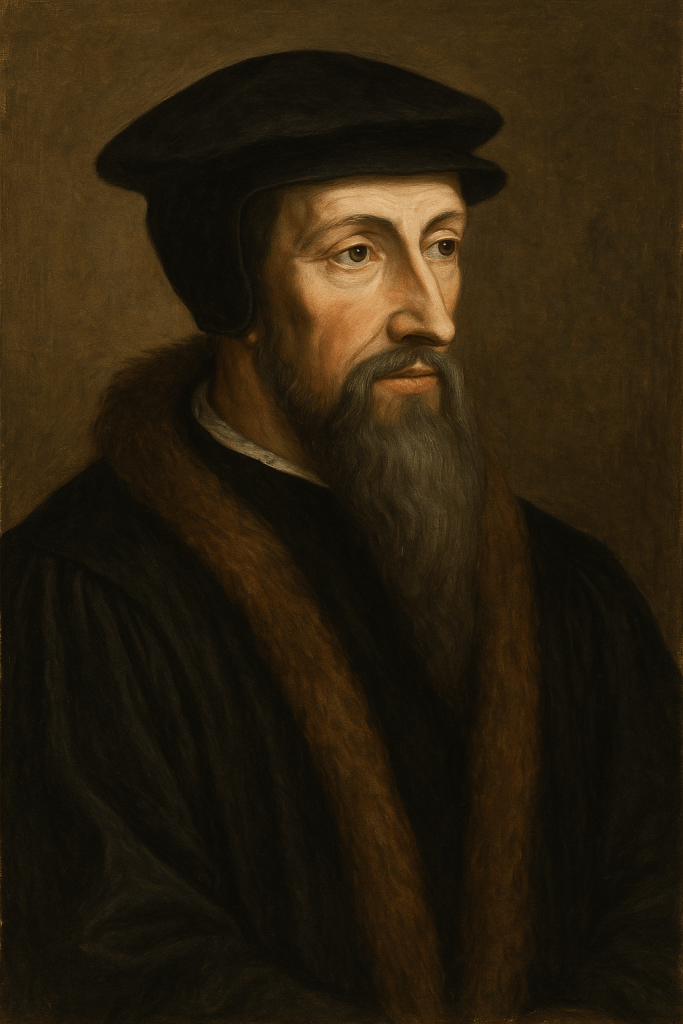








 Reformed Faith Insights