
We live in an age where many Christian men are rediscovering the language of strength, leadership, and authority. In a culture often marked by moral confusion and spiritual apathy, this renewed desire is not inherently wrong. Scripture itself calls men to courage, conviction, and faithful stewardship. Yet history — both biblical and modern — warns us that when strength is severed from humility, it quickly corrodes into something dangerous.
As I recently read through the book of Esther, one figure stood out with unsettling clarity: Haman. His story is not merely a record of ancient Persian arrogance; it is a mirror held up to every generation. Haman embodies the kind of pride that craves recognition, demands submission, and quietly feeds on the intoxication of power. His downfall reminds us that God has never tolerated the elevation of self above righteousness.
You probably will believe this is written from a posture of superiority. I am deeply aware that the seeds of pride live in every human heart — especially my own. My intention is a pastoral concern: that Christian men would resist the lure of domination and instead pursue the cruciform path of humility modeled by Christ.
A Sobering Cultural Observation
Across America, many men are searching for stability in what feels like an increasingly unstable world. Institutions once trusted now appear fragile, cultural norms shift rapidly, and the moral landscape often seems uncertain. It is therefore unsurprising that some men are drawn toward voices promising clarity, order, and a return to strength. The impulse itself is understandable. God did not design men to drift passively through life, but to lead with courage, protect what is entrusted to them, and cultivate what promotes human flourishing.
Yet there is a subtle danger lurking beneath this renewed emphasis on strength. When leadership is divorced from Christlike humility, it begins to warp. Strength becomes harshness. Conviction becomes arrogance. Authority becomes control. What initially appears as righteous resolve can quietly transform into a hunger for dominance.
The church must be discerning here. Not every call to strength is biblical, and not every display of boldness is born from the Spirit. True spiritual authority is never self-exalting; it is marked by gentleness, patience, and a willingness to serve. The danger is not that men desire leadership — it is that leadership becomes intoxicated with power rather than anchored in love.
Meet Haman: The Anatomy of Godless Pride
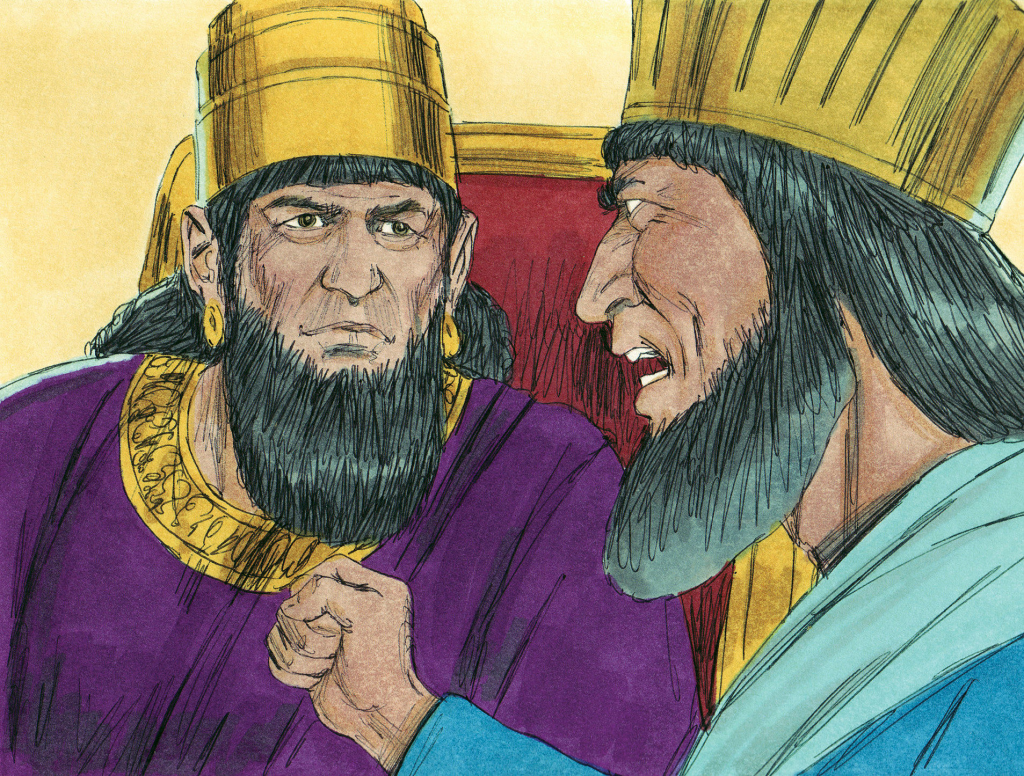
Few figures in Scripture illustrate the danger of unchecked pride more vividly than Haman. Elevated to a position of immense influence under Ahasuerus, Haman possessed status, wealth, and public honor — yet none of it satisfied him. Pride is never content; it constantly demands more.
His fury toward Mordecai began with a simple refusal to bow. What might have been dismissed as a minor offense instead exposed the fragility of Haman’s ego. Rather than governing with justice, he weaponized his authority for personal vengeance, manipulating the king and crafting a decree that would annihilate an entire people. Such is the progression of pride: what begins as wounded honor can quickly escalate into destructive ambition.
Haman also reveals how domination often masks insecurity. The man who appears strongest is frequently the most threatened by dissent. Unable to tolerate even one voice that would not revere him, he built the very gallows intended for another — an eerie symbol of how arrogance engineers its own downfall.
Haman’s story is not preserved merely to recount history, but to warn every generation: when the heart exalts itself, collapse is never far behind.
The Modern Temptation: Domination Disguised as Dominion
The tension between dominion and domination is not new, but it feels especially urgent in our moment. From the opening pages of Book of Genesis, humanity is entrusted with dominion — a sacred calling to steward creation, cultivate what is good, and exercise authority under God’s rule. Dominion was never meant to be exploitative; it was designed to reflect the wise and benevolent kingship of the Creator Himself.
Domination, however, is a corruption of that calling. Where dominion nurtures life, domination constricts it. Where dominion protects, domination intimidates. One operates from security in God; the other is driven by fear and the need to control.
This distinction is critical for Christian men who rightly desire to lead. Leadership shaped more by cultural frustration than by Scripture can slowly drift toward severity. Harsh words become justified as “strength,” impatience masquerades as conviction, and coercion is reframed as decisiveness.
But biblical authority never crushes those under its care. It strengthens them. When exercised rightly, leadership should cause wives, children, churches, and communities to flourish — not shrink back in quiet apprehension. The question every man must wrestle with is this: does my leadership cultivate life, or does it merely consolidate power?
The Household Test: Where False Masculinity Is Exposed
If a man wishes to evaluate the authenticity of his leadership, he need not look further than his own household. Public confidence can be manufactured; spiritual authority at home cannot. Scripture consistently teaches that the proving ground of godly leadership is not the platform, the workplace, or the political arena — it is the quiet, ordinary rhythms of family life. The apostle Paul makes this unmistakably clear in the Epistle to the Ephesians, where husbands are called to love their wives “as Christ loved the church and gave himself up for her.” This is not the language of domination, but of costly, self-forgetting sacrifice.
Likewise, the First Epistle of Peter urges husbands to live with understanding and honor toward their wives as fellow heirs of the grace of life. Authority that disregards tenderness is not biblical authority at all.
False masculinity reveals itself quickly in the home: children obey but feel distant, a wife complies but is not cherished, and peace is maintained through pressure rather than love. Forcefulness replaces gentleness; control substitutes for care.
Godly leadership, by contrast, creates an atmosphere where those entrusted to a man’s care feel secure, valued, and able to flourish under his strength.
The Biblical Antidote: The Humility of Jesus Christ
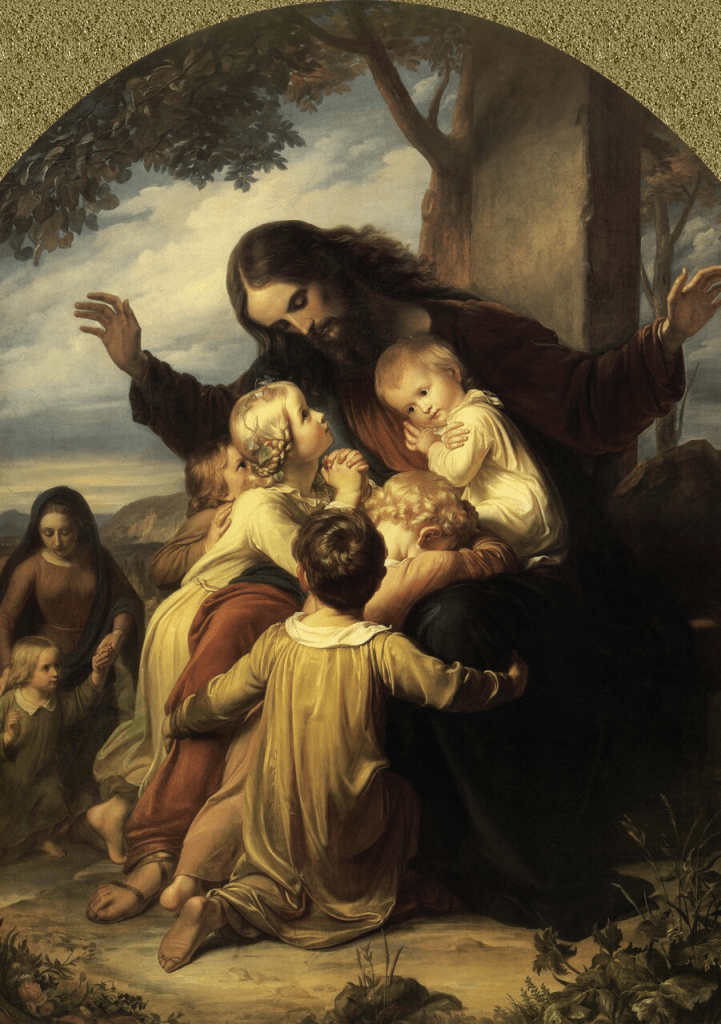
If pride is the disease, then Christ provides the cure. Nowhere is true strength more clearly defined than in the life of Jesus. Possessing all authority in heaven and on earth, He never leveraged His power for self-exaltation. Instead, He knelt to wash the feet of His disciples, welcomed the overlooked, and spoke life to those crushed beneath the weight of their sin. Divine authority expressed itself through radical humility.
This is the great paradox of the kingdom of God: power is perfected through self-giving love. The cross forever dismantles the illusion that harshness is strength or that intimidation produces righteousness. Jesus could have subdued His enemies with a word, yet He chose the path of sacrificial obedience.
For Christian men, the implication is unavoidable. Leadership must be cruciform — shaped by the cross. It is not enough to be decisive; one must also be gentle. Not enough to command; one must be willing to serve.
The question, then, is not whether a man leads, but whether his leadership resembles the Savior he professes to follow.
Strength Reimagined: What Godly Masculinity Looks Like
In a culture eager to redefine manhood through extremes — either harsh domination or passive indifference — Scripture offers a far more compelling vision. Godly masculinity is neither abrasive nor absent; it is steady, ordered, and life-giving. True strength is not measured by how forcefully a man asserts himself, but by how faithfully he governs his own heart.
A godly man is humble without being timid. His confidence rests not in personal superiority but in submission to God. He is courageous without cruelty, willing to stand for truth while refusing the sinful impulse to wound with his words. His convictions are firm, yet his posture remains approachable. Authority flows from spiritual maturity, not emotional volatility.
This kind of masculinity builds rather than bruises. It creates environments where others can grow safely under its protection. It listens before speaking, disciplines without humiliating, and leads without demanding constant recognition.
Such strength is rare precisely because it requires self-mastery. It is far easier to control others than to crucify pride. Yet the man who learns to rule his spirit becomes a source of stability to everyone around him — a quiet reflection of the ordered strength God intended from the beginning.
A Necessary Self-Examination
Before we are too quick to identify the pride of Haman in others, wisdom calls us to look inward. The human heart has a remarkable ability to condemn publicly what it quietly tolerates privately. Pride rarely announces itself; it often disguises itself as conviction, strong leadership, or even zeal for righteousness. Yet Scripture consistently invites believers into the difficult but liberating work of self-examination.
It is worth asking uncomfortable questions. Do I feel slighted when my efforts go unnoticed? Am I threatened by disagreement, interpreting it as disrespect rather than an opportunity for patience? Do those closest to me experience my leadership as safe and steady, or tense and unpredictable? These are not accusations, but invitations to spiritual honesty.
I write this with a sober awareness of my own susceptibility. Apart from grace, none of us drift naturally toward humility. The instinct to protect our reputation, secure our influence, and defend our preferences runs deep. But the gospel frees us from this exhausting self-preservation.
The most dangerous form of pride is the one we fail to see. Therefore, before confronting the spirit of domination in the culture, we must first surrender every trace of it within ourselves.
The Danger of Power Without Character
Power itself is not the enemy. In fact, all authority ultimately flows from God and is meant to be exercised for His glory and the good of others. The danger emerges when influence outpaces formation — when a man gains the ability to lead before his character has been deeply shaped by obedience. Scripture repeatedly warns that unchecked ambition can distort even sincere faith.
Consider the sober admonition of the First Epistle to Timothy, which cautions against elevating a recent convert to leadership lest he become “puffed up with conceit.” The warning is timeless: spiritual maturity must precede spiritual authority. When it does not, leadership becomes a stage for ego rather than a channel for service.
History inside and outside the church confirms this pattern. When Christianity is treated as a tool for influence rather than a call to holiness, faith becomes performative. Authority subtly transforms into an idol, and people are viewed less as souls to shepherd and more as obstacles or instruments.
Character is what steadies power. Without humility, patience, and self-control, influence will eventually fracture what it was meant to protect. But when authority is anchored in Christlike maturity, it becomes a force that strengthens rather than scatters.
A Pastoral Prayer
When confronting the subtle allure of pride, argument alone is not enough; the heart must be brought low before God. Perhaps the most fitting response is prayer — not merely for others, but for ourselves. For if we are honest, the desire for recognition, control, and influence crouches at the door of every soul.
Lord, deliver us from the quiet intoxication of self-importance. Guard us from confusing loudness with courage or severity with strength. Teach us to kneel before we presume to stand, and to listen before we are eager to speak. Form within us the kind of humility that does not need to announce itself, and the kind of leadership that does not demand to be noticed.
Make us men who tremble at Your Word rather than grasp for authority. Where pride has taken root, uproot it gently but completely. Where ambition has eclipsed love, reorder our desires. Grant that our homes, churches, and communities would be marked not by fear, but by the steady warmth of Christlike care.
And should You entrust us with influence, let it never outrun our devotion — so that everything we lead might ultimately point back to You.
Choose Your Example
The contrast before us is as ancient as Scripture and as present as this very moment. On one side stands Haman, a man who grasped relentlessly for honor, demanded reverence, and mistook proximity to power for personal greatness. His story ends with a sobering reminder that pride is ultimately self-destructive; the platform he built for his glory became the instrument of his downfall. God has a way of humbling what the human heart insists on exalting.
On the other side stands Jesus Christ, who willingly descended into humility, taking the form of a servant and embracing the path of sacrificial love. Where Haman reached upward, Christ stooped low — and in that very humility was exalted above every name. The kingdom of God is not advanced by domineering men, but by surrendered ones.
Every generation of believers must choose which pattern to follow. The world may applaud forceful personalities and celebrate unyielding ambition, but heaven esteems the gentle and contrite heart.
History will always produce its Hamans. But the Church is strengthened by men who have been crucified with Christ — men whose strength is revealed not in how tightly they grasp power, but in how faithfully they lay it down.
 Reformed Faith Insights